Sunday, June 29, 2008

interview with Flora Purim


The music of Flora Plurim has been at the forefront of Latin and American jazz music for over 25 years. She has earned two Grammy nominations for Best Female Jazz Performance and Downbeat Magazine Best Female Singer accolade on four occasions.
Flora’s musical partners have included Gil Evans, Stan Getz, Chick Corea, Dizzy Gillespie and she has collaborated with Airto Moreira on over 30 albums since 1967 when they arrived in New York with him in from their native Rio.


Her musical taste and genius developed thanks to her father, a Russian émigré, who played violin and her mother who was a talented pianist in her own right. Before leaving Brazil to escape the repressive regime of the time, she, like many Brazilian musicians, had mastered playing piano and guitar whilst developing her impressive vocal talent.
After arriving in New York Flora and Airto became central to the period of musical expression and creativity which produced the first commercially successful Electric Jazz groups of the 70s.


Pianist Duke Pearson was the first American musician to invite Flora to sing alongside him on stage and on record. She then toured with Gil Evans, and she worked with Chick Corea and Stan Getz as part of the New Jazz movement that also contained the influence of the great Cannonball Adderley.


In the early 70’s, two classic albums - "Return to Forever" and "Light as a Feather" introduced the fusion jazz sound!

Her first solo album in the US, Butterfly Dreams was released in 1973, which catapulted her straight into the Top Five Jazz Singers on the Downbeat Magazine Fame Jazz Poll.

During her career Flora has given her contribution to some of the greatest recordings of the seventies - Carlos Santana, Hermeto Pascoal, Gil Evans, Chick Corea and Mickey Hart . In the mid-Eighties, Flora and Airto resumed their musical partnership to record two albums for Concord for which she received a Grammy nominations and she continues to record and perform right up to the present day.

Jazzmotel is proud to present a LADY OF JAZZ.

This is the interview with Flora Purim.


One question I always ask the artist interviewed for Jazzmotel is: What are your musical origins? How did your taste develop?


My music origins are Brazilian and classical.

In 1967 you left Brazil for New York. Up until then with whom had you collaborated and what had been your experiences in Rio. Tell me about the musical atmosphere that was around Brazil at that time.


I became a professional singer in 1965. I worked extensively with Hermeto Pascoal, Sambalanço Trio, Sambraza Trio and recorded my first LP, entitled Flora é MPM, for RCA Victor. I also sang with the big bands of Maestro Cipó and Pocho as well as with the small ensemble called 7 de Ouros. I worked at the night club Stardust and at the temple of the Bossa Nova in
São Paulo, the João Sebastião Bar. The musical atmosphere was of the high quality of musicians and musicianship that had only one interest in mind: play, play, play! Brazil was beautiful and very inspiring in many different ways.


Musically speaking, what differences did you notice between New York and Brazil?


When I arrived in New York, it was December of 1967, and all I wanted was to listen to my favorite singers and musicians in jazz, which I did in a couple nights when I found out that in the Harlem was a jazz hang called Club Baron. Every active musician in town would converge to that club after their regular gigs, with the purpose of jamming. In other words the difference was only one. I could improvise in any style, and that was acceptable and welcome.
That time was indeed energetic and electric.


How was your first musical contact with New York jazz and in what way did you become part of the jazz musicians scene?


Then I joined Chick Corea and the original Return To Forever, along with bass player Stanley Clark, saxophonist and flute player Joe Farrell, Airto Moreira on drums, while I played percussion and sang unison lines on the melodies with the saxophones and flutes of Joe Farrell. When the group was not touring I would be rehearsing and singing with one of my mentors Gil Evans and his Big Band.


The first time I heard your voice was when I heard "Stormy" from the album "It Could Only Happen With You" of Duke Pearson. And I loved it.
Tell me something about your experience with the music of Pearson and Blue Note.


Duke Pearson fell in love with Brazilian music at first contact. And besides being an A&R and executive director for Blue Note, Duke had his Big Band and invited me to sing in two of his vinyl (LP) records: “How Insensitive” and “It Could Only Happen With You”. It turned out very nicely. He loved it and so did I.


Gil Evans has influenced your music and your artistic development in many ways. Of all his work, what has left its mark on you the most?


One his collaborations with Miles Davies entitled Miles Ahead: Miles Davis +19.


How can we define that New Jazz movement introduced by you, Airto, Chick Corea and Stanley Clarke among others? That sort of Electric Jazz with tropical undertones from the beginning of the 70's that they call Fusion.


I feel that fusion is not a bad way to describe it, except that we have to clarify that there are many types of fusion. That was a Jazz/Brazilian fusion; maybe we should call it illusion.


George Duke, Deodato, Hermeto Pascoal, Duke Pearson, Cannonball Adderley, are a few of the musicians with who you have worked. How much have they influenced your way of making music?


George Duke and Hermeto Pascoal as well as Airto and Gil Evans were the ones who helped me to decide the way I chose to sing by encouraging me to go ahead with my experimentations and validating me by coming to recordings and being part of my process of evolution.


What do you think of contemporary music that fuses 70's jazz with electronic
music?


I think is fine to try it but not everybody knows what it takes to successfully achieve a good result.

Do you think it has the same significance as the electric jazz that you used
to play?


No, I don’t think so.

Flora Purim
Paris - France, June 10th 2008.

Labels: , , , , , , , ,

Monday, October 30, 2006

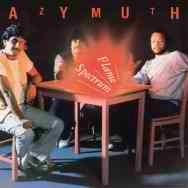
Interview to Azymuth


After long time i realize another of my dream , seen Azymuth play'n live.
As always i went there and i ask them " eu preciso de falar com vocè " they sayd " tudo bom !" and we had a chat ....
They were very kind to me more than the club owner ...
Heres what we talked that night ....


How have Azymuth changed from the times of "Samba Doido", "Crazy Samba", nightclub Caneçao, Youngsters, Milton Nascimento, Jorge Ben, Deodato, the music from the soundtrack "O Fabuloso Fittipaldi " in 1973 until now?

Now we have more maturity, we can make it different, our heart is open to the young generations and the new music... At the end the difference is the age and the head addiction! It's like a wine…

Your sound is always contemporary and authentic, what are your inspirations... We know that Bertrami worked with Flora Purim and Robertinho Silva: was this an inspiration for Azymuth?

In the beginning when we were young we were listening to a lot of Jazz Big Bands like Glenn Miller, Duke Ellington etc... Orchestras, a lot of Samba too: we put all this together, it was fantastic.

How important was the label Milestone for your success in America and Europe?
Milestone opened the Doors for the world, for the success, it was very important for Azymuth. We did many LPs with Milestones.

Which work of yours do you consider as your best one: Melo da Cuica, Light as a Feather, Azymuth, Partido novo or Telecomunication?
For me (Ivan Conti) our best work is Telecomunication, its a moment, you know, this album is a memorial time in the studio, very clear, we had the open heads, we talked, a lot of communication. We played everything perfect! This is our favourite one!

How important is the label Far Out for your modern sound?
Far Out brought the Band on the road again. This label is important because it gives us another kind of sound. Some years ago we were stopped for a few and we said "let’s get something new started" and Far Out brought the old Azymuth forward again.

What do you think about remixes producers like Jazzanova, Global Communications, Mark Pritchard, Kenny Dope and 4Hero?
Now I like it very much, in the beginning when I heard these remixes I was very excited but it was strange, we were not so ready to hear this kind of changes, we didn’t understand that at that time. Now we understandthat it’s is a new kind of idea and a new sound and we like it.

You have never stopped making music since 1972, always being up to date yet preserving your typical sound. What’s your secret?
The secret is the respect, the patience for each other, some time we fight, of course, but we always get the other way to create another sound... What’s important is the union and the respect for eachother’s opinions and ideas.

What do you think about the new Brazilian music explosion, DJ’s and producers like Marky, Patife, etc.?
There’s a lot of good music now and a lot of bad too!

One of my favourite tune is Manha from 1975, tell us something about that song.
Manha is good times! Everything fresh in our head, we were young, now we have to run like Forest Gump! Manha is a special time song, I like it too!

Labels: , , , , , , , , , , , , , , ,

Azymuth


I will focus on just one group who, different to many others, have 2 not indifferent qualities: the first is that of always evolving during the 30 years of activity, maybe even creating, sounds that have become contemporary and, every time, innovative; the second, that appears to contradict the first, is that of always maintaining, whatever happened, their very own original sound. This group, formed in Rio during the 70’s, is called Azymuth. Reunited after many collaborations with various Brazilian musicians during the sixties, they were initially called ‘Grupo Selecao’, even if they also made a few recordings with the same line up under the name ‘Som Ambiente’. The definitive name came about officially in 1973 during the recording of the soundtrack ‘O Fabuloso Fittipaldi’ by the brothers Marcos and Paolo Sergio Valle, created for a documentary about the famous Formula 1 driver where, from the piece entitled “Azymuth” contained on this soundtrack, they took the name of which they are still identified even today. Ivan Conti ‘Mamão’ (drums and voice), Alex Malheiros (Baixo and voice) and Josè Roberto Bertrami (Teclados and voice) create a very typical sound that, breaking away from the classic Bossa Nova or even Samba from that period that they re-baptized ‘Crazy Rhythm’, was characterised by little instrumentation: and electric Rhodes piano and some synths, bass, drums and Brazilian percussion like the Ciuca, Berinbau or Tamburim that were used only on the first three records, in fact after a few years their percussionist died in an accident and after that they were never used any more, in memory to their friend to whom they were very close. Their true success in Brazil started in 1975 when the piece “Linha Do Horizonte” was used for a very famous soap opera then in 1976 they published another album and, in 1977, participated (the only Brazilian group to do so up until that moment) at the Montreaux Jazz Festival which opened the market to the European and American markets. In 1979, thanks also to the feedback obtained at the festival, they signed a contract with Milestone / Fantasy records (an historical American label that was used to signing up all those groups of a jazz flavour with tendencies towards Fusion or Jazz Funk) and the road was opened for their definitive consecration for Europe and America. “Light As A Feather” is the album that made them known to all and thanks to pieces like “Jazz Carnival” made them enter, apart from the dancefloors in places like Japan also, into the Guinness Book Of Records as the first Brazilian group programmed on the American radio stations for an entire year! In the eighties there followed other albums on which they changed formation and even labels, then, to follow, they went back to their original line up. Now, after thirty years and more than 15 albums, they celebrate this prestigious milestone with a European Tour that, In November, touched Italy also… In 1997 the English label Far Out, very in touch with the quality electronic and jazzy sounds, thought well of also having Azymuth as part of their stable alongside Marcos Valle (another giant of 60’s Brazilian music) for all those DJ’s and producers who are now lighting up our electronic nights by creating, at the end of the nineties together with their colleagues from Compost, this new Germanic or Anglo-Brazilian sound! There are many, in fact, collaborations that Azymuth have done or are currently doing with this new generation of producers because deep basses and 12 finger Rhodes chords has been part of their sound for years and they amalgamate perfectly to all these ‘nu productions’ and contribute towards the growth of this new sound. Those with 4 Hero, Seu Jorge and Natures Plan are just a few of these collaborations that we can define as ‘modern’ and if in them there maybe wasn’t the contribution of the ‘Crazy Sound’ of Azymuth we couldn’t begin to imagine what might have happened… The albums recorded on Far Out are “Before We Forget”, “Partido Novo” and the latest “Brazilian Soul” where Azymuth, to celebrate their thirty years, also involve high calibre musicians such as Roberto Menescal, Emilio Santiago, Marcio Lott, Fabiola, Ze Carlos and Leo Gandleman and where, in my opinion, the sound is truly incredible because it forges the ‘Brasileira’ soul with the sounds of today’s dancefloors, also the old generation with the new. Well, this focus on one of the most innovative groups on the Brazilian scene ends here: now, as always, over to you to begin searching! Peace.

Labels: , , , , , ,

Free Web Counter
Free Counter