Friday, May 29, 2009

"Metti una sera a cena " interview with Edda Dell'Orso

I was listening to an Ennio Morricone soundtrack , I was traveling with the sound of the Italian Soundtrack Lady voice Edda Dell'Orso , the Soundtrack was " Metti una sera a cena " .
I decide to look for this fantastic voice , call her and ask for an interview .
This woman was never too much on the scene and it was not easy to find her , but after met , I realyze that she is a humble woman and a great artist , so in invite her for a dinner " a cena " .
this is the result .

"Metti una sera a cena " interview with Edda Dell'Orso


What are your musical origins? What were your influences?

Musically I began as a pianist. I started to play the piano when I was 5 or 6 years old. The music that I listened to were mainly music from American film scores, mainly music by Gershwin, Cole Porter.

What were your experiences before your contact with the world of cinema?


I started with the chorus. A classical chorus that was called Coro Polifonico. I then moved to the Franco Potenza chorus and finally with Maestro Alessandroni (I Cantori Moderni )where I was lead soprano. Every now and again a voice was needed for 7 or 8 measures and it was then that I became to Morricone's attention for the first time. And then came C'era una volta il West (Once A Upon A Time In The West)and thus was born the “instrumental voice” which is was what I loved to do when I was small.

Speaking of Alessandroni and Cantori Moderni, you were part of this very versatile and in demand vocal group. How did the hiring come about?
You recorded many film scores in a relatively short time. Were the composers in competition with each other to have you work with them?


The hiring of Cantori came from Alessandroni, Morricone, and Cipriani. They would call me at home. While for other engagements we were contacted by the management of the single Orchestras.


How did you go about developing a theme? Did the projection of the film or the reading the screenplay have any influence or did the composer instruct on how the piece should by executed?

Umiliani, Morricone, Bruno Nicolai, Jess Franco, Berto Pisano, Alessandro Alessandroni, You sang with the greatest masters of music for films during the golden age for this genre. What were you feelings and emotions at the time?

During that period we made many recordings. At times I would find myself in the recording studio from 9 in the morning until midnight. In any case there was a 3 hour shift every day and we worked very hard but it was very exciting to work with such masters. It was my life.


I heard your voice when I was just 5 years old, listening to theme music to “Metti una sera a cena” which remains my favourite. Can you tell me something about the development of this music?

Usually I would be called in when the film was already finished. Many times I wouldn't even see the scene. Again, the Musical Director Morricone gave my the score and I would read and interpret it as if I was an instrument. This was my way of singing. I remember that Morricone played me the theme on the piano. The film director Patroni Griffi was also there. The theme was the one which I would have to sing. If I remember correctly, when I heard the first bars, that “haunting” riff, I was very affected by I told Morricone that it would be great if it was sung. That’s how the famous theme to “Metti una sera a cena” came about.

Do you usually listen to the theme tunes you have sung? Which is your favourite ?

All of them are great. I particularly like “La Donna Invisbile”(Morricone). I also like “Giù la testa”, “Margherita”, “le Stagioni della Vita”.


In the last few years film music has made a comeback and many theme tunes have been reissued, while a few have remained very rare and costly gems. What do you think of this comeback?

I think it’s due to the fact that they are showing those types of films again and also that Morricone is playing a lot with his orchestra and so he presents these themes again and the public appreciate them a lot.

Many of your songs for Morricone are vocalised or skat but a few times, “Verushka” for example you sing in a pseudo-English. How did this style of singing come about?

Let’s say that a few songs, mostly the Bossanovas, for example “La Donna Invisibile”were very suitable non only to vocalisation but to this thing also. If you ask me what I was saying. I don’t know. Maybe every now and again an English syllable would come out but all this would come from the way I would read the music, they’re called “Phonemicsi”

Many theme tune were inspired by jazz or Bossanova or Samba. These genres were all the rage at the time.

Usually Bossanova was chosen for the lighter situations, let’s say, erotic, (Director Dell’Orso). Let’s say it wasn’t exactly Bossanova which is a quite definite Brazilian way of music. It was a lighter rhythm that resembled Bossanova. Morricone played plenty of that.

Did you ever sing on compositions that were later used as soundtracks?

I sang “Il treno” by Bruno Nicolai that had been written for an advert for the Ministry of Transport. Many times I would sing and then honestly I wouldn’t know what use they would be put to.


What are your plans for the future? What are you doing at the moment?

When there’s an opportunity, I sing. Benefit concerts and a new CD called “A childs dream”... A Morricone double CD will shortly be released with all the famous tracks I song on, all original recordings apart from the theme to “Deborah”, which due to some editorial reason had to be re-done.

Labels: , , , , , ,

Thursday, January 29, 2009

interview with Antonello Vannucchi I Marc 4

Jazzmotel, after many interviews with European and worldwide jazz legends, returns home to Italy and begins a series of interviews with legends of music for film and library music.

Interview with Antonello Vannucchi.


During his career Antonello Vannucchi has performed with artist such as Chet Baker, Barney Kassel, Bobby Hackett, Kenny Clarke, Lee Konitz. Vannucchi, often pianist for Minnie Minoprio, also accompanied some of the great performers of Italian music from Mina to Ornella Vanoni.
Vannucchi also recorded “beat” songs for Ariston Records under the name of I 4 di Lucca later known as the great Marc 4.The name comes from the acrostic of the names of the founders (Maurizio, Antonello, Roberto, Carlo), all musicians wo were part of the Italian State Television (RAI) Orchestra. Essentially a studio band, because of the considerable technical ability of the single players, Marc 4 began to collaborate with the most prestigious authors of film scores : Ennio Morricone, Nino Rota, Armando Trovajoli, Gianni Ferrio, Piero Piccioni, Piero Umiliani, Alessandro Alessandroni to name a few. At times the guitarist Bruno Battisti D'Amario also collaborated with them.


Later the group began to produce their own material which had its origins in the beat style but later developed more into bossa nova and jazz, They recorded a few LP's and singles which are now very rare and sought after.
The principle characteristic of their sound was Vannucchi's Hammond organ. They also worked on TV themes, for example with Mooke/Simona, the theme tune to the program Controfatica, and also the two singles Tema di Nino/Romanza Popolare, which in 1974 were used as the theme tune for a television series about a doctor.
The single players also had a significant career as session musicians.

Where does your unmistakeable style of jazz come from? Who were your favourite musicians and how did they influence you at the beginning of your career?

I was fascinated by BeBop. Miles Davis was the one that opened up my listening to jazz music. I remember a 78rpm called “Down "or something like that , I cannot remember well .
Dizzy Gillespie,Clark Terry , Ray Brown and Bud Powell also influenced my taste, I loved bop from the 40's and 50's. I wanted to use two saxes to recreate that typical sound, the Bebop sound.

You played for a long period with the RAI Orchestra, accompanying the queens of italian music such as Mina and Vanoni. Was it easy to get into RAI and play with such an orchestra?

I played with the Rai Orchestra from 1965 to 1995, I played with Mina, Vanoni and the Kessler Sisters. We also created a small combo that played with them when they toured. We played many concerts, in Europe and beyond.

Tell me about the fabulous group “I Marc 4”. How did they come about?


“I Marc 4” came together in the early 70's. We played on many film scores, we were session men, let's say.
At times, the music director Trovajoli like also Umiliani or Piccoli, asked us, in certain particular moments of a film, to create sounds that appealed to our taste, commentary music (library)
And from that the idea of recording these “commentaries” or other pieces under the name of “I Marc 4”.
The name derives from the initials of our names Carlo Pes, Maurizio Majorana, Roberto Podio and me Antonello Vannucchi.
The Serni label produced these records that were later used as library music on “Cronache Italiane” etc..


When you were writing pieces for soundtracks, surely you had more room to move creatively. Did you have a catalogue of pieces already composed or did you compose according to request and demand?


Most of the times they would give us some themes and we would create ad hoc soundscapes.

“I Marc 4” were defined as the “Trovajoli Soloists”. Other than with this Musical Director you also worked with composers such as Ennio Morricone, Nino Rota, Gianni Ferrio, Piero Piccioni, Piero Umiliani, Alessandro Alessandroni.. How were you taken on or engaged. You were in high demand at the time...

Let's say that our sound was in demand,. We had an Hammond Organ and our sound was inspired by Jimmy Smith, this was the early 70's.

We could say that you were the rhythm session of the Italian theme music.

Exactly!! And we were also the rhythm session for the RAI Orchestra

At times you composed under other names. How come?

Being a part of RAI, myself Podio and Majorana, according to contract, we could not have a dual role and so when we were asked for a piece of library music, we'd record them under made up names or friends names in order to get round the problem of not being able to be under dual obligation. The names used were De Luca , Edmundo Rossi , Romolo Grano etc...

Which Musical Director was able to acknowledge your renown jazz vein?


Trovajoli for sure. He was a jazz player in his own right. Piccioni also loved jazz. He was very eccentric. !

You also played with jazz legends from overseas such as Chet Baker, Barney Kassel, Bobby Hackett, Kenny Clarke, Lee Konitz.
Was there a difference between playing with foreign musicians who were strictly jazz and Italian composers who had a background of classical or popular music?

When Baker came out of prison in Lucca in 1965, he came knocking straight at my door. We decided to form a group to accompany him during his concerts. We did this for quite a long time during his stay in Italy. The group was composed by me on vibraphone, Baker on trumpet, Andrea Tommaso on double bass and Franco Mondini on drums.

Mina, The Kesslers Sisters, “La Bussola”. What was the atmosphere like in Rome in the early 70's ?

The atmosphere was fantastic and always electric.

Do you ever listen by chance, to some theme tune which you played on or some recording by Marc 4 ?


Yes I still have all the vinyl records of our work and every now and again I listen to them. I know them off by heart by now.

What do you think about the desire that there is now (in the last few years) to look for, listen and even dance to that music.?

Naturally it pleases me ! I think that the music that we did then is very close to that which the young people listen to today, so it not difficult to see why they appreciate that type of music.

Labels: , , , , , , , , , ,

Sunday, June 29, 2008

interview with Flora Purim


The music of Flora Plurim has been at the forefront of Latin and American jazz music for over 25 years. She has earned two Grammy nominations for Best Female Jazz Performance and Downbeat Magazine Best Female Singer accolade on four occasions.
Flora’s musical partners have included Gil Evans, Stan Getz, Chick Corea, Dizzy Gillespie and she has collaborated with Airto Moreira on over 30 albums since 1967 when they arrived in New York with him in from their native Rio.


Her musical taste and genius developed thanks to her father, a Russian émigré, who played violin and her mother who was a talented pianist in her own right. Before leaving Brazil to escape the repressive regime of the time, she, like many Brazilian musicians, had mastered playing piano and guitar whilst developing her impressive vocal talent.
After arriving in New York Flora and Airto became central to the period of musical expression and creativity which produced the first commercially successful Electric Jazz groups of the 70s.


Pianist Duke Pearson was the first American musician to invite Flora to sing alongside him on stage and on record. She then toured with Gil Evans, and she worked with Chick Corea and Stan Getz as part of the New Jazz movement that also contained the influence of the great Cannonball Adderley.


In the early 70’s, two classic albums - "Return to Forever" and "Light as a Feather" introduced the fusion jazz sound!

Her first solo album in the US, Butterfly Dreams was released in 1973, which catapulted her straight into the Top Five Jazz Singers on the Downbeat Magazine Fame Jazz Poll.

During her career Flora has given her contribution to some of the greatest recordings of the seventies - Carlos Santana, Hermeto Pascoal, Gil Evans, Chick Corea and Mickey Hart . In the mid-Eighties, Flora and Airto resumed their musical partnership to record two albums for Concord for which she received a Grammy nominations and she continues to record and perform right up to the present day.

Jazzmotel is proud to present a LADY OF JAZZ.

This is the interview with Flora Purim.


One question I always ask the artist interviewed for Jazzmotel is: What are your musical origins? How did your taste develop?


My music origins are Brazilian and classical.

In 1967 you left Brazil for New York. Up until then with whom had you collaborated and what had been your experiences in Rio. Tell me about the musical atmosphere that was around Brazil at that time.


I became a professional singer in 1965. I worked extensively with Hermeto Pascoal, Sambalanço Trio, Sambraza Trio and recorded my first LP, entitled Flora é MPM, for RCA Victor. I also sang with the big bands of Maestro Cipó and Pocho as well as with the small ensemble called 7 de Ouros. I worked at the night club Stardust and at the temple of the Bossa Nova in
São Paulo, the João Sebastião Bar. The musical atmosphere was of the high quality of musicians and musicianship that had only one interest in mind: play, play, play! Brazil was beautiful and very inspiring in many different ways.


Musically speaking, what differences did you notice between New York and Brazil?


When I arrived in New York, it was December of 1967, and all I wanted was to listen to my favorite singers and musicians in jazz, which I did in a couple nights when I found out that in the Harlem was a jazz hang called Club Baron. Every active musician in town would converge to that club after their regular gigs, with the purpose of jamming. In other words the difference was only one. I could improvise in any style, and that was acceptable and welcome.
That time was indeed energetic and electric.


How was your first musical contact with New York jazz and in what way did you become part of the jazz musicians scene?


Then I joined Chick Corea and the original Return To Forever, along with bass player Stanley Clark, saxophonist and flute player Joe Farrell, Airto Moreira on drums, while I played percussion and sang unison lines on the melodies with the saxophones and flutes of Joe Farrell. When the group was not touring I would be rehearsing and singing with one of my mentors Gil Evans and his Big Band.


The first time I heard your voice was when I heard "Stormy" from the album "It Could Only Happen With You" of Duke Pearson. And I loved it.
Tell me something about your experience with the music of Pearson and Blue Note.


Duke Pearson fell in love with Brazilian music at first contact. And besides being an A&R and executive director for Blue Note, Duke had his Big Band and invited me to sing in two of his vinyl (LP) records: “How Insensitive” and “It Could Only Happen With You”. It turned out very nicely. He loved it and so did I.


Gil Evans has influenced your music and your artistic development in many ways. Of all his work, what has left its mark on you the most?


One his collaborations with Miles Davies entitled Miles Ahead: Miles Davis +19.


How can we define that New Jazz movement introduced by you, Airto, Chick Corea and Stanley Clarke among others? That sort of Electric Jazz with tropical undertones from the beginning of the 70's that they call Fusion.


I feel that fusion is not a bad way to describe it, except that we have to clarify that there are many types of fusion. That was a Jazz/Brazilian fusion; maybe we should call it illusion.


George Duke, Deodato, Hermeto Pascoal, Duke Pearson, Cannonball Adderley, are a few of the musicians with who you have worked. How much have they influenced your way of making music?


George Duke and Hermeto Pascoal as well as Airto and Gil Evans were the ones who helped me to decide the way I chose to sing by encouraging me to go ahead with my experimentations and validating me by coming to recordings and being part of my process of evolution.


What do you think of contemporary music that fuses 70's jazz with electronic
music?


I think is fine to try it but not everybody knows what it takes to successfully achieve a good result.

Do you think it has the same significance as the electric jazz that you used
to play?


No, I don’t think so.

Flora Purim
Paris - France, June 10th 2008.

Labels: , , , , , , , ,

Wednesday, January 09, 2008

Interview with Eumir Deodato


From Eumir Deodato web site :
Widely regarded as one of the most respected and sought-after musicians in the music world, Brazilian-born Eumir Deodato has racked up 16 platinum records to his credit as artist, arranger or producer with combined sales of well over 25 million records in the USA alone.
His discography, including compilations and all his work as arranger, producer and keyboardist, surpasses 450 albums.
In addition, several artists over the years have covered his songs, including George Benson, Lee Ritenour, Sarah Vaughan and The Emotions to mention just a few.
Deodato will probably forever be associated with one song - his innovative rendition of Richard Strauss' classical opus Also Sprach Zarathustra (or more commonly known as the theme to 2001: A Space Odyssey).


It's a big honour for me to guest here at JAZZMOTEL one of the greatest Brasilian Composer .
Together with Marcos Valle , Tom Jobim and Vinicius de Moraes , Deodato is the man who made the Brasilian Music History.
In this interview I ask Eumir to talk about his very early period ..and I discovered another great man and artist of course.
Enjoy another great JAZZMOTEL interview .


I know that you have always had a great passion for orchestral music and that you recorded your first session with a 28 piece orchestra when you where 17.
Who were your favourite composers and who inspired your taste?

Some of the classical orchestrators that inspired me a lot were Maurice Ravel, Igor Stravinsky, Alban Berg, Paul Hindemith, Rimsky-Korsakoff  and a few others. On the jazz and pop side, Gil Evans, Oliver Nelson, Bob Brookmeyer, Henry Mancini, and many others.

 
1964 was a very prolific year for you. From your first album "Inútil Paisagem" where you mainly performed and rearranged classic pieces by Tom Jobim and Vinicius de Moraes up to "Idéias" where apart from the songs of Marcos Valle and other composers, we started to hear some of your own compositions. How did you go about choosing the tracks for your LP´s?

Usually together with the record company and some of the writers of the songs involved.


Again in 1964 with "Impulso" and "Tremendão", you begin a chapter which is very dear to me: Os Catedráticos, the use of the organ and a turning point for Bossa Nova, for me ...
Tell me about this project and of the contribution that the organ gave to create that sound that today is known as Lounge.


This started with my collaboration with a small Brazilian label called Equipe. I did an album for them called "Los Danseros In Bolero" since boleros were still very popular in Brazil. It had an instant success which was then followed by Os Catedráticos which was originally intended as a dance group playing mostly samba and slow dancing pieces.

 
Roberto Menescal, Paulo Moura,Wilson das Neves, Maurílio Santos, Rubens Bassini, Dom Um Romão, Airto, Bebeto remember are a few of musicians you have played with. What kind of relationship did you have with these great musicians considering that you were all very young and full of ideas?

These were mostly studio musicians at that time and also the best ones you could find then.


Milton Nascimento, Marcos Valle, Elis Regina and Antonio Carlos Jobim in Rio and then you moved to New York in 1968 and you started to work with the Brazilians that were already there: Luiz Bonfa, Astrud Gilberto, Walter Wanderley and again with Marcos Valle . What was the difference between composing in Brazil and composing in the States? Were there other influences at work in the States and what were they?


The major differences of working in the States versus Brazil is primarily the fact that in the States the musicians have a more serious development (studying in colleges and Universities) and a very good sense of "team" as opposed to "individual" which happens a lot in Brazil and other less developed countries. Besides, it´s much easier to find equipment and instruments in the US.  Better and more advanced studios etc.

 
You arranged "Beach Samba" for Astrud Gilberto and you were noticed by Creed Taylor, from then on you started to produce for many artists. In which way did your musical taste change working for CTI?

I learned a lot by working with the Creed Taylor "team" (Herbie Hancock, Billy Cobham, Ron Carter, George Benson, Eric Gale, Ray Barretto and many others). My most important lesson was to be simpler and let the individual musicians create on their own, which was not the case in Brazil where I had to write note by note for the guitar, for example. As far as my "taste" in music, it did not change at all. Just my "perception" of people´s vision of "pop jazz" and other styles.


Your arrangements on CTI for Wes Montgomery, Paul Desmond, Stanley Turrentine George Benson and Tom Jobim made your style much sought after even by artists that were not essentially jazz, like Frank Sinatra (Sinatra & Co.) Roberta Flack (Killing Me Softly, Chapter Two, Quiet Fire) and Aretha Franklin (Let Me Be Your Life). How important were those collaborations for you?

It was always very important to me, to be able to get involved in diverse situations. The biggest challenge for an arranger is to be able to deal with different styles and personalities. But it is even more important to make sure that the artist achieves its goals either musically or even commercially. It´s also essential to work with the record company to make sure that they are happy enough to spend good money in promotion for that particular project. It would be a very serious mistake to go against the record company or trying to impose your musical "views" into a project that needs your help and specific work done.


And then "Prelude" in 1973 and Also Sprach Zarathustra, 2001: A Space Odyssey, right up to worldwide success and 16 platinum records, and all the other albums (at least 450 in the whole career ) on which you worked on as a musician, producer and arranger .
How did Deodato career change after that in the 70´s ...

I went "on the road" (traveling and doing concerts around the world) and met many wonderful people what in turn helped the continuation of my work even as an arranger. Also got involved with a couple of other movie soundtracks etc.


A funny thing and a curiosity : Marcos Valle told me that after exchanging his Rhodes for a DX7 he regretted it and he once came to New York to the hotel Suite where you lived and he asked you to sell him one of your Rhodes. What´s your version of this story?it makes me always smile ...


Since I had many keyboards (6 Fender Rhodes...) I agreed to sell him one of my best ones. We were always good friends...

 
How do you see Eumir Deodato today?

I see Eumir Deodato every day... In the mirror !!! Specially when I´m shaving...

For other infos about Deodato click the link to his site :


Labels: , , ,

Friday, December 14, 2007

The French Touch


Lets take a step back 30 or so years to analyse its homonymous during the 60’s / 70’s. The French sound is indisputably characteristic and it distinguishes itself musically in its Cinematic Sound as well as Library or simply on a Pop Jazz level in such that the French have always liked to experiment with electronic equipment along with acoustic instruments for realising very creative and innovative sounds. As we have already discussed in precedent issues the end of the sixties was a very fertile period for that regarding this kind of sound and it is just that on which I will be focusing by once again telling you about all that which I feel to be essential. Let’s start then with a few illustrious names… Vincent Geminiani was a French composer and sculpture who loved percussion, not intended as we intend it, but as a ‘sculpture instrument’, experimental and orchestral like, for example, ‘Le Brontè’, a kind of singular vibraphone created by him and used on many occasions, also requested by other composers. At the beginning of the seventies he created “Musique Pour Un Voyage Extraordinaire” that was nothing less that a musical comment abstract enough for a Shakespeare piece… a bit like Axelrod for William Blake.

In 1972 MPI (Musique Pour L’image), a transalpine label that specialised in post-scoring for the tv and radio, published some of his compositions amongst which a piece called “Orphis Le Serpentaire” that fully represented that which was the French sound of that period where everything was allowed and where culture, sound and style research seeped through. This song was contained on a piece of vinyl that included all of the pop experimentations of Gemiani from that period entitled ‘Modern Pop Percussion De Paris’ in which scat vocals mixed together with true bass ‘trips’, drums and ‘orchestral noises’, blossoming into beautiful pop pieces with very groovy and catchy rhythms. Another big name was Nino Nardini, a French composer of Italian origin who started his musical experience at a very early age because, just like Geminiani, he came from a family of musicians. Many of his best compositions tied to the sound in question are ‘available’ on Chappell (a French label that specialised in post-scoring music) and one of his pieces of work (re-pressed just as few years ago) that I would recommend is “Rotonde Musique” that was realised with the Pop Riviera Orchestra where the sound is very similar to that of the Mohawks but with a softer touch.. a ‘French Touch’ to be more precise.


In a previous Article I mentioned his masterpiece “Jungle Obsession”, an album to have at any cost because it represents and essential piece of musical history, I will talk again about it though for the motive I have just mentioned and also because it introduces another maestro who collaborated often with Nardini. They called themselves Roger Roger (Georges Teperino) and many of their works were helped along by Nardini for the Chappell label (the “Mood Music” volumes are proof of such…). Roger Roger were specialised in electronic amalgamated with knowledge giving, naturally, a French Touch to the orchestral parts as well as the grooves. Another pseudonym was Cecil Leuter with which was signed the masterpiece entitled “Pop Electronique”, a very rare piece of vinyl, already reviewed in ‘The Soul Beat’, that united pure electronic with pure groove! To finish off this focus on the ‘60’s French Touch’ I will cite a composer of Balkan origins who is also one of my favourites… this much sought after musician (musically of course) is Andy Lore (or Daniel White, Janko Nilovic), one of the maestro’s of Parisian library music. “Pop Impressions”, “Psich Impressions”, “Vocal Impressions”, “Pop Revolution”, “Ambience Et Rhymes” and many others are his pieces of work realised during the 60’s on labels such as Telemusic, Montparnasse 2000 and many others.
The sound of Nilovic was very unmistakable and had a certain baroque touch to it where scat vocals and orchestral parts (often abstract) were united to contemporary rhythms (60’s) and a pop jazz sound. For space reasons I have only told you about the most famous exponents of that which I define as the ‘60’s French Touch’ but many other composers and musicians have contributed to it also: names that often signed to soundtracks or post-scoring were Vladimir Cosma, Jack Arel, Dave Sucky, R. Guiot, Guy Pedersen, Francis Lay, Roland Vincent, Romauld and others. I will stop here… now its your turn to try and figure out the true origins of the ‘French Touch’. Aurevoire and.. peace now!

Labels: , , , , ,

Monday, December 04, 2006

Interview to Marcos Valle


Like a dream come true i went in contact with one of my great Idols , my favourite Brasilian composer , Mr Marcos Valle.
I discover a great man , humble and cool , a man with an open mind , an artist always ready to experiment and create new sounds always with his great and unmistakable sound and touch ...heres a chat with Marcos Valle


I read you studyed classical music , wich one is your favourite classical
composer , theres someone who inspired your musical taste and style?


M: Ravel and Debussy were the pricipal ones.


Listening to some of your records like " Garra " or " Marcos Valle " from
1970 i heard that in songs like " Des Leis " i can feel some kind of 60's
European or American infuence , wich bands were an ispiration for you?


M: Steely Dan,Chicago, Earth,Wind And Fire, Beatles, Harold Melvin And The
Blue Notes, War, Blood,Sweat And Tears, were some of them.


My Marcos Valle favourite tunes are " Ele e Ela "," Viagem " and "Pigmaiao
" also because i love that kind of waltz tempo , can you tell me something
more about " Ele e Ela " and waltz tempo in Bossanova?


M: Jobim,Menescal and I have written some waltz tempo songs.. I think it
blends well with the the softness and sensuality of the Bossanova mood.
I have written at least 6 of them,and "Ele e Ela" is also one of my
favorites,because of the chords changes and the smooth melody.


Most of your songs are about love how love influenced your musical life .


M: I can´t understand the world without love,so my songs talk about it.Not
only love between 2 persons,but also love for your people,for all the
races,for the ones who need care.


What you think about mixing Bossanova with other styles like Funk or
Psychedelic sounds in the 70's or electronics today..


M:I love these experiments and mixings.They inspire and excite me.


How important were the traveling in North America for being in time with the
music , like you are already now.


M:Well,besides having my songs recorded there,my personal contacts were very
interesting.
I had good times touring with Sergio Mendes in the Sixties.
The success of my song "Summer Samba "in 67 took me to some of the most
important musical American TV shows;I had the chance to record then 2
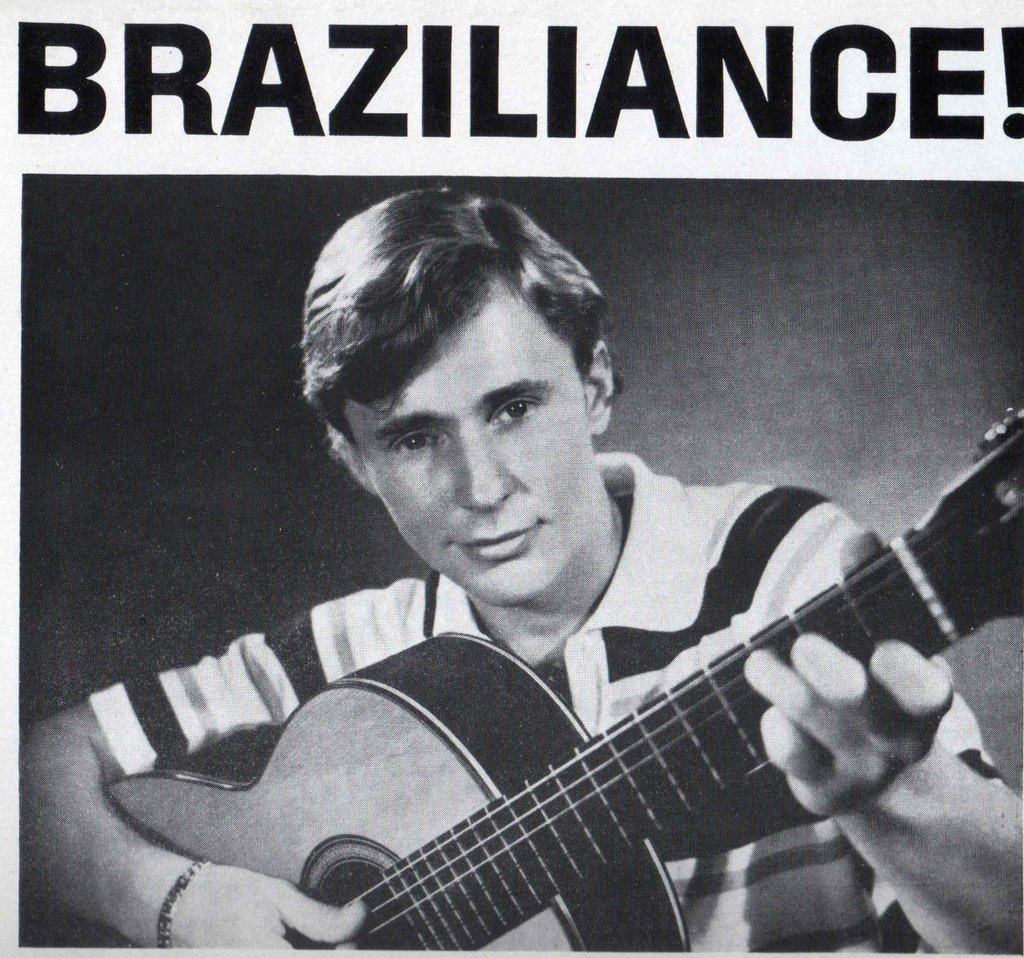
albuns:one for Warner,named "Braziliance-The Music Of Marcos Valle" and one
for Verve:"Samba 68".I had a chance to meet important artists as Henry
Mancini,Quincy Jones,Johnny Mandel,Ron Carter and others.And from 75 until
80,when I stayed 5 years there,I met Sarah Vaughan,with whom I
recorded,besides having my songs recorded by her;the group Chicago also did
it;I had a chance to write many songs with Leon Ware,partner of Marvin Gaye
(Leon recorded many of our songs);I collaborate with Airto Moreira writing
the arrangements for his album "Touching You,Touching Me",and also had songs
recorded by my friend Deodato.


You wrote the Azymuth song that inspired Azymuth band , can you tell me
something about that soundtrack , i mean "O fabuloso Fittipaldi".


M: I had written the song "Azymuth",with my partner Novelli,in the 60s,for
the opening of a TV film,about racing driving.And recorded in the accoustic
piano myself. Then,years later 2 important movie makers,Roberto Farias and
Babenko decided to Make a film about the 2 times World Formula One Champion
Brazilian Racing Driver Fittipaldi,and they asked me to write the score; and
as they loved the song "Azimuth",they asked me if I could write a new
arrangement of that song for the opening of the film,which I agreed.To
record the soundtrack with me,the producer of the album decided to call 3
talented musicians: Jose Bertrami(Keyboards),Alex Malheiros(bass) and
Mamao(drums),and I playing the accoustic piano.
Bertrami and I wrote the arrangements together.We wrote a new arrangement
for "the song "Azymuth",but basically,my piano solo was the same,and I wrote
new songs for the rest of the film.
I could not put my name in the record as a performer,once I had a contract
with EMI,and this was being recorded in Phillips(Universal today).So,we had
to find a name for the performers.The producer thought about "Conjunto
Azymuth" ("Azymuth Band"),because of the opening song.I agreed.
After the record,those 3 musicians decided to stay together,and asked me if
they could use the name "Azymuth" for the band.I agreed,and I became the
"Godfather" of the group.And I really think they are probably the best
Brazilian instrumental band .


You collaborate with a lot of Brasilian musicians , wich collaboration were
the most important for you .


M: Joao Donato , Milton Nascimento , Edu Lobo , Menescal , Lulu Santos ,
Carlos Lyra , BossaCucaNova , Cidade Negra , are just some of them.


Its very difficult to find Marcos Valle original vinyls , the vinyls you
find are very expensive . what you think about this ?


M: I wished they were less expensive , so people who enjoy my music were
able to buy them.


Can you describe me the felling of Rio de Janeiro in the 60's .


M: It was very stimulating.I had my first song,entitled "Sonho de Maria",
recorded in 1963,by Tamba Trio.And a little bit after that,Os Cariocas
recorded 2 songs of mine,"Amor De Nada" and "Vamos Amar".And in 64,I signed
a contract to record to EMI for 5 years.
What was fantastic is that all the composers,musicians and singers use to
get together almost every week,in someone,s house,and I always wanted to get
there with a new song to show Jobim,Carlos Lyra,Menescal,and all the
others.So,I had to look for quality.I did not think in what would be
comercial,never.We just wished to write good songs.And that was the same for
film producers,plays,books,all kinds of art.The sixties were very creative.
Even when we had the military government,we were very productive.We had
problems with the censors,but did not give up.The lyrics started to change
to social and protest subjects.The meetings now were not only musical,but
also political,to discuss what we could do against the government.They
included all kind of art people.


When i listen to your 60's and 70's records i feel a kind of energy and
positive thinking about that period , it's Brasil changed today ?


M: As I say,I was very stimulated to do things and write a lot.
Today we have democracy,thanks God.Elections are free,we choose who we
want.But we still have the social problems.The population is much bigger,the
poverty also.We must fight that to find peace in our country.
We do not have anymore those weekly meetings,but I love to get together with
other composers of other generations,other music styles,and write songs with
them.That moves me.


What are you doing now , i know you are playing a lot in this period , can
you tell me something about your future projects?


M:I just came back from a great European tour,with my band,including 17
shows in different countries.
I Have recorded a new CD,all instrumental,with new and old
songs,produced,arranged and performed by me,playing the Rhodes,Accoustic
Piano,Guitar,Mellodica and keyboards,with my band,and have achieved the Tim
Award (the most important music award in Brasil) as the best instrumental CD
of the year.The CD was released in Europe,Japan and USA by Universal.
I will be perfoming 5 shows in Australia next January,in Sydney and
Melbourne Festivals,and in May I will start a new European tour.
And in Brasil,I will be perfoming a lot, also with my band .
And I will be recording a new record in 2007,I still do not know were.Let´s
see.

Marcos Valle

Labels: , , , , , , , , , ,

Thursday, November 02, 2006

interview to Airto Moreira


This time I would like to propose a chat with one of the Jazz legends I always love because of his way to be a kind of a magical percussion player , a guru .And when i met him , my sensation was to talk to a Witchdoctor... I had the chance of hearing Airto play as a guest star for an Italian group and I thought about talking to him to find out a bit more about a side of him that is little known to the public. Airto Moreira is known above all for his collaborations with Miles Davis, Weather Report and many other Jazz musicians such as Chick Corea or John McLaughlin or Keith Jarrett or even Quincy Jones, Paul Simon, Chicago, Herbie Hancock etc.. In this brief discussion I wanted to focus on the Brazilian period before he went off to New York and met all of the above mentioned names that made him become somewhat of a legend. We also spoke of New York, it was inevitable!

I am very interested in your starting out period when you played in groups such as Sambalanco Trio in 1965 with Cesar Camargo Mariano on piano and Humberto Clayber on bass or with the Sambrasa Trio also in 1965 with Hermeto Pascoal where you played the drums and this trio was very different from the others because its sound was very innovative and very articulate, simple but creative at the same time.

It’s true, here also there was much space and we were very young and ambition was sky high, we had much space up until Cesar at a certain point decided to leave the Sambalanco Trio for a singer called Marisa. We asked him to stay but he was convinced and in love, he wanted to start producing records for Marisa and so he left. Speaking with Hermeto it came out that he really liked our sound and so we decided to ask him to join us. Hermeto joined up on the condition that we changed the name from the Sambalanco Trio to the Sambrasa Trio, we agreed and with his Flute playing the sound became even richer and new, that’s when Flora Purim began singing with us.

The record entitled “Quarteto Novo” in 1967 changed the face of Brazilian music. The sound was very pure, classic but innovative at the same time. That quartet didn’t last very long, what do you remember about that period?

It was a very happy period and musically deep, the group was riding high and everybody couldn’t wait to get into the studio and play, experiment and create. The lovely thing was that, once again, there was enough room for everybody’s creativeness.

Then, after that period, Flora Purim went to New York and you followed her some time after. How did two Brazilians feel in New York?

It was fantastic, it was like being in a film and we were a part of that film. I was 23 and had difficulties because I didn’t speak English. Then we began to meet musicians like JJ Johnson, Cedar Walton and the bass player Walter Booket, then thanks to Walter we began playing with Adderley, Lee Morgan and Paul Desmon as well as Zawinul who put me onto Davis.

There started something that everybody calls ‘Jazz Fusion’ and albums like “Free” and “Fingers” were the start of this sound. The mixture between the sound of Jazz musicians like Hubert Laws or Ron Carter from CTI along with your typical touch created this kind of new sound, how would you define it?

I would simply define it as ‘Brazilian Jazz’.

You have collaborated with many musicians as a percussionist but also as a producer, I would like to ask you something about one of your productions that is very dear to me: “Amazon” by Cal Tjader from 1976?

In the beginning it was very hard work, this record united typical Californian Latin jazz with Brazilian influences. We worked on the project for more than three weeks and the result was amazing, I remember well Cal, when I see the cover it still moves me a lot, it was a great time.

What future projects do you have, are you recording anything?

Flora and myself are continuously recording, we then propose the material to labels for its publication. At the moment I am starting a 3 week tour of Japan and USA with Chick Corea and Eddie Gomez.

Ray Barretto sadly passed away not too long ago, he was also a great percussionist, did you know him?

Yes I knew him, Ray was a brilliant percussionist as well as a great person, the last time I saw him was two years ago in Barbados where we were both there for playing, we crossed each others paths quickly and then I never saw him again.

As you have probably understood Airto, just like all of the others who I have had the pleasure of interviewing, is a very simple person. His way of being made you feel that you were talking to some kind of saint or Macumbero, an experience that once again enriched my Soul Beat spirit, I hope it did the same for you. Peace all over the land.

Labels: , , , , , , , , ,

Free Web Counter
Free Counter