Thursday, September 13, 2007

We know you got soul , BROTHER !


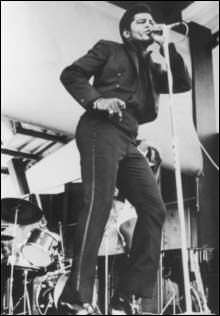
Yesterday was not a great day for me and for all the Funky Soul lovers , Mr Bobby Byrd is gone in Heaven to let everybody know ( if theres someone who does'nt know ) that he got Soul !

Love to you Bobby and thanks for give us Funk , Hubleness and Soul .
Rest in Peace Brother .

Labels: , , , , ,

Friday, August 03, 2007

introducing Mr Terry Callier


Terry Callier was Born in Chicago were also Curtis Mayfield, Jerry Butler, Ramsey Lewis and more was .Terry Callier began studying the piano at the age of three, he writed his first songs at the age of 11.
In the College period , he learned to play guitar and setting up residency at a Chicago .
In that city he coming to the attention of Chess Records arranger Charles Stepney, who produced Callier's debut single "Look at Me Now" , it was 1962.
In 1964, Callier met Prestige label producer Samuel Charters, and a year later they went in the studio to record his LP "The New Folk Sound of Terry Callier "( Prestige ).
The album went unreleased before finally appearing in 1968.
With his friend Jerry Butler's they starts the Chicago Songwriters Workshop and composed material for local labels including Chess and Cadet, one of the famous was the Dells' 1972 smash "The Love We Had Stays on My Mind."
Stepney, now a producer at Cadet, release Callier 1973's "Occasional Rain", an incredible fusion of folk and jazz which laid the groundwork forexplored on the following year's "What Color Is Love?"
Callier works were not so commercial, and after 1975's LP "I Just Can't Help Myself" he finished his relation with Cadet.
In 1978 he starts a new relation with Elektra's Jazz Fusion of Don Mizell, they release the orchestrated "Fire on Ice" followed in 1979's by "Turn You to Love", with this album he cracked the pop charts with the single "Sign of the Times" known thanks the legendary WBLSFM DJ Frankie Crocker. After Electra he largely disappeared from music in the early '80s.
Callier continued composing songs, till 1991 when he received a telephone call from Eddie Piller, the boss of he U.K. label Acid Jazz. Piller ask the permission to rerelease Callier's littleknown single from 1983, "I Don't Want to See Myself (Without You)" and the rest is history ...
Callier stars to collaborate , touring and release his new works after decades of stop .
Now Terry Callier is still going great and his consider most important exponebt of Folk-Jazz sound .

Terry Callier Discography :

New Folk Sound of Terry Callier (1964)
Occasional Rain (1972)
What Coloor is love 1973
I Just Can't Help Myself 1975
Fire on Ice 1978
Turn you to love 1979

Labels: , , , , , ,

Interview to Terry Callier


After meet him in Milan and get back to him at Jazz Cafe in London , Mr Terry Callier pleased me with this interview that confirm Callier as a Great musician and a Great man.
Thanks Terry .


Wich were your favoutrites musicians in the beginning , who influenced more your taste and style ?


In the very beginning I was influences by doo-wah (sometimes referred to as 'doo-wop' ) groups like Sonny Til and the Orioles, the Spaniels,  the Ravens, the Diamonds, The 4 Seasons and gospel artists like the Soul Stirers with Sam Cooke, Sister Rosetta Thorpe and Rev. James Cleveland.  After I started listnening to jazz, my favorites were John Coltrane, Miles, the Modern Jazz Quartet, Oscar Peterson, Billie Holiday, Sarah Vaughn, Dinah Washington, Ray Charles and many, many others.


When you met Charles Stepney from Chess records Terry Callier thing started , how did you met him ? and how it was important for the starting of your career .
 
I first met Charles Stepney at a recording session for Chess records.  He was the arranger for a group of singles that included "Look At Me Now".   The producer was Esmond Edwards and the musicians included Paul Serrano on trumpet and Phil Upchurch on guitar.  It was my first recording session and more or less set the tone for the rest of my career.
Then with Prestige Records your first album "New Folk Sound of Terry Callier "....
I was playing at a club in Chicago called 'Mother Blues' and the owner of the spot introduced me to a producer from Prestige Records names Sam Charters.  He asked me if I was ready to do an album and naturally I said I was.  He told me the budget would be small but I could use two other musicians.  I had been listening to a lot of early Coltrane on record where he had experimented with two bass players and I told Sam that was what I wanted to do.  So the instrumentation on "New Folk Sound" was acoustic guitar, vocals and two acoustic bass players.


In 1973 Occasional Rain started a kind of Folk-Jazz thing , how this blend did born ?
 
Again, this was influenced by Coltrane.  He had passed away by this time and I was listening to a lot of Miles Davis, so he was also influential in terms allowing musicians to play what they felt and approaching the music as a group project.


"Orinary Joe" and "Look at me now " are 2 songs that are very" Callier ", please can you tell me some things happened during the writing , recording of these 2 great songs ?
I mean the feeling , the vibe ...
 
"Look At Me Now" was among the first songs that I recordsd for Chess records.  I had been writing songs since I was 13 years old and this was one that the Chess brothers liked.  I was trying to convince my mother that a career in music wouldn't be so bad and I was more or less talking directily to her . . . "Well my mama thinks that I just fake it -- 'Cause I do things she don't understand ..."  Eventually she did
accept the fact that I wasn't going to be a doctor or lawyer.

 "Ordinary Joe" took me the longest time to write of any other song that ever happened to me.  I was carrying the main riff around for three or four years before I had a clue as to what it was going to be about o what it was going to say.  Then one day it just fell on me line by line.  I didn't know what the title was until the last verse had written itself.  I never like to say I wrote this or that because that's not the way it goes down.  Songs just seem to happen to me or more accurately are presented to me from the Creative Source.  I wish I could say more about it but I truly can't . . .

In 1975's I Just Can't Help Myself was le last record with Cadet , than you passed with Electra under the head of Don Mizell .
Wich were the differences of Callier sound betwen this two labels ?

 
The first ablum recorded for Elektra ("Fire on Ice") was a continuation of what I had done with Charles Stepney at Chess.  The second album ("Turn You To Love") had a disco influence and one track "Sign of the Times" made the Billboard charts and was used as a them by Frankie Crocker, a well-respected and popular DJ who was broadcasting from New York.


After Electra experience you desapear untill somebody , in 1991 called you to ask the permission to reissue "I Don't Want to See Myself (Without You)" (1983 ).
Acid Jazz movement were born and your new career too .
What can you tell me about this thing , were you surprised ?


I stopped performing in 1983 in order to take care of my daughter.  She called me from California and told me she wanted to live with me in Chicago.  There was no way I could refuse and I knew that music wouldn't provide the kind of things I wanted her to have.  I attended a computer training school (Control Data Institute in Chicago) and eventually was hired as a temporary employee at the University of Chicago.  They made me a staff employee in '85 with paid vacations, healthe insurance and most of the things a single parent needed.
 
I was at my desk a few years later and received a call from Eddie Piller of Acid Jazz Records in London.  He tolld me that "I Don't Want to See Myself Without You" was being played around the UK and asked if we could re-issue the disk.  It took a while for him to convince me it was a genuine offer and we worked out an agreement to put the song out in the UK.  To my suprise, it proved to be quite popular and led to concerts and glub gigs in the UK and Eurpoe.
Then you started touring , recording and collaborations with lots of musicians and DJ 's ...
The first artist I worked with was Beth Orton.  Then there was 4Hero, Zero Seven, Koop, Ian Poole, Paul Weller - - - I'm forgetting some important names here and I apologize for that.


What you think about this rebirth of 60's and 70's Jazzy music started in late 80's ?


Remixes of jazz recordings from the 60's and 70's exposed that music to a new generation and did the music and the people a lot of good.  There's almost always a method of updating good sounds so they can be appreciated by new listeners.

Whats your plan for the future ?

The future is difficult to see.  I'd like a chance to release new forms of music with new ideas including Jazz, R&B, trip-hop and hip-hop influences.  Hopefully, this will take place soon.  Thank you for the interest . . .

Labels: , , , , , ,

Monday, April 09, 2007

LATIN BOOGALOO


JAZZMOTEL will be ‘boiling with Soul’ and I will take you into that hot but very fresh sound called Boogaloo than Latin Soul. In America this sound was famous between 1966 and 1969 and was the first contemporary Latin form that got the attention of a vast public that were a bit tired of the usual Cuban, Mambo and Cha Cha rhythms. Boogaloo, thanks to its Funky sound, was liked above all by the Afro-Americans, it was a highly successful fusion because it also ‘involved’ people that, in the past, never knew Latin music. It is said that the genre in question was born out of the interaction of the Afro-American dancers with the Latin musicians of New York who played in the clubs and night clubs of that period. People such as Joe Cuba say that this sound had a very explosive and stinging tone, to the point that pieces like “Bang Bang!” were created to shake up the dancers and, above all, stimulate them because they were no longer responding to the more classic Latin sounds, no, they were looking for something innovative. Many Latin musicians were also influenced by R’n’B and Jazz, and they therefore created a sound that, quoting various critics and musical historians, became a true milestone of Latin music, also because it came up during the high point of the Charanga popularity and just before the Salsa explosion! It was probably Joe Cuba who at the time gave the input (followed by all those who were playing Latin music in New York like Ricardo Ray, Ray Barretto, Pete Rodriguez, Joey Pastrana, Eddie Palmieri, etc.) and that, with this music, managed to create a meeting point between Puerto Ricans and blacks. Boogaloo didn’t have its own specific dance but like other genres of the 60’s it gave the opportunity for you to move freely and, seeing that all the ballroom floors were made of wood, pirouettes and jumps were the nights attraction. When reading your mail I have understood that you are interested in knowing also the names of the musicians (and relative titles) who started off the various sounds, I will get straight onto it by citing the classic “Bang Bang Push Push Push!” by the Joe Cuba Sextet (quite possibly the inventor of Boogaloo?). Instead, my favourite is “Hard Hands” by Ray Barretto (where you can hear the wonderful “Love Beads”), then there is “Acid”, another Barretto, that contains the classic “Soul Drummer” or “Mercy Mercy Baby” (distinguishable by the bassline riff that was sampled by Mighty Bop during the trip hop era). For those who really want to flip out I would recommend two masterpieces that are very close to R’n’B: I am talking about “Land Of Love” by Moon People and “Take A Trip Pussycat” by the Latin Blues Band (a pseudonym of the same Moon People), albums (recorded in 69 on the obscure Speed label) that are really fantastic and indispensable in any respectable collection! Another great interpreter of this genre (and also classic Latin soul) is Joe Bataan who, thanks to his “Subway Joe”, “St. Latin’s Day Massacre” and “Afrofilipino”, became known all over the world. Not to be missed also is “Let’s Get Down To The Nitty Gritty” by Riccardo Ray because it re-produces pop pieces like “Sookie Sookie” and “Mony Mony” (here in a Boogaloo version that is very rhythmic and danceable). Now I will mention some labels on which have been recorded some splendid Boogaloo albums: probably the biggest of them all (as far as New York Latin music is concerned) is Fania, I will also mention Tico, Allegre, Nike, Speed, Mardi Gras, Double Shot, Omega, Polydor and, also, King of James Brown… yes because also some of the Funk and R’n’B stars have been taken over by their rhythms that later came back revisited by or has influenced artists who in turn were contaminated! The James Brown piece most influenced by Boogaloo is “Shhhhhh For A Little While” where the author, something very rare, doesn’t shout out and sing but instead plays the Hammond… Well, if you come across it buy it because in my opinion it is one of the nicest pieces from Brown… maybe even the best! It is now time to say goodbye and invite you to write to me, especially if you have any questions or would like to have further info about the very vast groovy world of JAZZMOTEL.

Labels: , , ,

INDO JAZZ SUITE


The Indo-Jazz

After hearing Mathar by Dave Pike and other pieces on a compilation by Gilles Peterson, I understood that Indian music had been mixed together, in an excellent way, with pop but also with jazz. That’s when, like always, I began to get to the bottom of things seeing that both Indian music and jazz were favourites of mine. During this period I was in London visiting some friends and as I wandered about the shops I found myself in front of Honest Johns that is by the underpass in Portobello Road. I remembered that once my friend had told me that you could find some good jazz at H. J…. so I decided to go in. I was in the jazz section that was just inside the front door but in the basement (today the entrance is different) and I started to look through the hundreds of pieces of vinyl. After a while I decided to ask one of the assistants, looking after this section, if they had any jazz mixed together with Indian music. The guy thought for a few seconds and then he got out the gatefold LP’s of John Mayer and Joe Harriott called “Indo-Jazz Suite” and “Indo-Jazz Fusions”. The records had that typical smell / perfume of old vinyl and cardboard sleeves, I asked if I could have a listen and seeing that the price was very high the guy put them on the deck and began to play them. They were very different to what I had heard on the compilation, they were a double quintet of Jazz Musicians and Indian Musicians, the sound was fantastic and very early 60’s jazz flavours! There is no point mentioning that those two pieces of vinyl were the first in a long line of Indo-Jazz vinyl in my possession. I want to talk for a second about John Mayer even if Gabor Szabo, Dave Pike, Wolfgand Dauner, Alan Lorber Orchestra and many others have united Jazz and Indian Music together with some excellent results. John Mayer was born in Calcutta in 1930 and began getting a passion for music right from an early age of seven when he used to play the Violin, he then began to study basic Jazz drum rhythms and started getting into this genre. After winning a purse for studying he arrived in London in 1950 we he studied and composed mixtures of Indian music with Western music and then became part of the Royal Philharmonic Orchestra up until 1965. One year earlier the EMI producer Dennis Preston asked him if he could create an Idiom in a jazz key to complete an album that he was working on and Mayer accepted. Soon Preston told Mayer that he had played the piece to Atlantic Records in New York and that they had liked it a lot, enough so that they recommended that he created a piece of work that forged together Jazz and Indian Music. For some time Mayer was thinking about making up a quintet formed of Sitar, Tambura, Harpsichord, Tablas and Flute, the idea of Atlantic was to unite this quintet with that of the saxophone player called Joe Harriott. After one month of writing the LP “Indo-Jazz Suite” was recorded in two days and was released in 1966 in both England and America, it was a success straight away and soon after it was followed by the release of “Indo-Jazz Fusions”. This is the story of how John Mayer created this sound called Indojazz that I will now describe to you in more detail. Indojazz is divided into two suites and the first contains “Contrast”, “Raga Megha” and “Raga Gaud-Saranga” that are based around Raga, a scale of Indian Music that is characterised by ascending and descending patterns that never have less than five notes. The second is composed of “Overture” that instead is much more Jazz based over a rhythm of beats extended to ten. In this direct recording by Mayer the Tablas make the rhythm and the Tambura, a kind of 4 chord Sitar offers the tone whilst the Sitar follows the Raga. After intros in pure Indian style Joe Harriott who was noted for his ‘Alto Sax Free Jazz Attitude’ had no problems following the pattern, just like the pianist Pat Smythe, the bass player Coleridge Goode, the drummer Allan Ganley and also the other musicians. There came an album that was highly structured where the pieces started with Sitar and Tambura sequences and then let enter one by one the other instruments that created that avantguard jazz sound where the East is no longer the East and the West is no longer the West! Peace all over the land.

Labels: , , , , , ,

Sunday, December 17, 2006

Interview to Marva Whitney


Here we are ...Im very excite to have the pleasure and the privilege to make my Thang with Marva Whitney.


What was your taste in music at the beginning? And now ?

I grew up with the music in church. Later I really liked Dionne Warwick, Etta James and Tina Turner.


Is there anybody that inspired your style ?

My mother. She is playing in church with me still today.


How did you first approach making music after being a church singer?

I first toured with a gospel group called the Manning Singers. Later I went on the road Tommy and the Derbys, a classic R&B act.

How did you meet James Brown and how did the collaboration start?

James Brown was playing in Kansas City and my former manager Clarence Cooper got me an audition. Mr Brown's former musical director Alfred Pee Wee Ellis auditioned me and gave Mr Brown a tape. He then asked me to come into his dressing room and hired me on the spot. I went on the road with him right away.

You started with my favourite JB band of my favourite period, what do you
remember about that ?

It was a lot of work. 30 one-nighters in 30 days. They were a great band, that's for sure.

When did you start to do to your own thing?
After I left James I recorded a few tracks for T-Neck, later I married Ellis Taylor who recorded me for his Forte label.


Something I always like to ask. Could you describe the feeling, the vibe
and the sensations and the experience of living through that period at the
end of the 60?s

That's really hard to do, because when you are living it, you don't think about it. I was very young at that time and excited. Of course I loved the attention I was getting, but my party was while I was on stage. After that, I went to my room and that was it. But of course I went to Vietnam with Mr Brown, which was quite an experience.


When recording a track, how much space did you and the band have and how
much of that decision was taken by JB himself?

We had no space. He told me what to sing, but sometimes he would let me write my words. Sometimes I made them up while I was singing. I can't really speak for the band, because usually the tracks where already laid out when I came in.


Could you describe to me a typical working day in the recording studio?

There was never a typical recording day. We usually recorded on the road, on our off-days. Sometimes we'd cut at very unusual hours. "It's my thing" was recorded at 6 a.m.


What do you think about Funk, Soul, and the rebirth of these styles from
the 80?s till the present day.

I never really followed what was going on in the 80s. My son first told me that some groups had sampled my music, which made me upset at first. But there is a lot going on this days, my current band Osaka Monaurail is from Japan, and they sound exactly like the James Brown Orchestra from 1969. They take funk very seriously.

Your records are very expensive now...

.. and I don't get paid a dime.

Are you still in touch with JB and the other musicians ?

I see some of them when I work with my agency, Soulpower. Because they also work with Sweet Charles Sherrell, Bobby Byrd, Vicki Anderson, Martha High, Pee Wee Ellis. Martha is my close friend, so was Lyn Collins. I don't talk to Mr Brown, but his manager, Mr Bobbitt, usually calls me up when they are in Kansas City. But I never went to his show.


What are your future plans?

My new album is coming out in Japan this month, it will be released worldwide in February. I have been performing quite a bit this year, all over Europe and Japan. We are ready to go come back to Europe and Japan in 2007 and we will tour in Australia. And we will definetely record a new album next year. Marva Whitney is back!

Labels: , , , , ,

Monday, December 04, 2006

the Soul of JB part one .


This is a very hot topic hotter than ever , im writing a small but very hard breakdown of vinyl from the ‘Godfather of soul’ Mr. James Brown. Everybody knows that his career started about 40 years ago with a very soulful piece but it hasn’t finished yet because our Godfather is still playing all over the world, he is also recording an album that will be the soundtrack to the new ‘Rocky’ film! The part of his discography that I would like to recommend is that which goes up to the end of the 60’s and beginning of the 70’s, the same years that have become a habit for ‘The Soul Beat’. That which follows doesn’t wish to be a detailed list of his records but just a taste of his capacity in inventing a sound that still goes today… frightening! We shall start the journey with “Grits And Soul” where James might not even be recognised because he doesn’t sing but instead plays the Hammond organ: we are talking about a collection of pieces that range from soul to honky tonk right up to orchestral R’n’B with “Who’s Afraid Of Virginia Wolf” (a classic that was even done by Jimmy Smith) that I would strongly recommend to all those who love soul from the mid 60’s. Following there is “It’s A New Day” (that begins to be more R’nB even if Soul is still in charge) in which groovy pieces such as “Let A Man Come And Do The Popcorn”, “Give It Up Or Turn It Loose” and “It’s A New Day” alternate with big dance numbers like “It’s A Mans Mans World” or “Georgia On My Mind”. The album “Say Loud I’m Black And I’m Proud” starts to show us that Brown has some clear ideas about politics, about Soul and about what he wants… this is because he is beginning to become a kind of God and many are beginning to take note! In this case also songs like the title track or “Licking Stick” alternate with other cooler ones like “I Love You” or “Maybe I’ll Understand”. To keep under observation, also, are a few instrumental singles that represent rare material because James likes so much to sing. Not many know that he, apart from dancing, is an orchestra leader as well as arranger, he also plays the organ, therefore there comes out 7”’s such as “Shhhhhh For A Little While” (remember that I mentioned this in the Boogaloo edition of ‘The Soul Beat’) or “The Soul Of JB” b/w “Funky Soul” on the KING label as well as the very rare and much sought after instrumental “The Drunk” on BETHLEM that, with the difference to the others, is not contained on any album. To follow there was “The Popcorn” that, apart from being the name of a dance that he invented, is also the title of the album where ‘our man’ leads and dances with the JB Band! In it, even picking with your eyes closed, we can find brilliant songs such as “The Popcorn”, “Soul Pride”, “In The Middle pt. 1 & 2”, “The Chicken” or “The Chase” (just to name a few). In these pieces you can hear that things are slowing down and that the groove is getting ever deeper: next is the birth of true funk! On the album “It’s A Mother” James invented definitely the ‘Funky with feeling’ sound with pieces such as “Mother Popcorn”, “Mashed Potatoes Popcorn” and “You’re Still Out Of Side” (there is no use mentioning “Pop Corn With A Felling” and the others!). In 1970 James Brown changed his band and published another instrumental album entitled “Ain’t It Funky” in which there is (in my opinion) the first true Funky pieces such as “Ain’t It Funky”, “Nose Job” (the title says it all!!), “Use Your Mother” and “Cold Sweat”: in my opinion this album will remain a milestone in the JB story, even if it is one of the lesser known ones. Before finishing off the first part of this edition of ‘The Soul Beat’ I want to mention another album, also instrumental, one of which I redefined my opinion on JB… It is entitled “Sho Is Funky Down Here” and represents a monumental parenthesis that James opened and closed during his long career. The mentioned album is nothing but a Funky Trip of Hammond, Clavinet, Fuzz Guitar and Wah Wah Grooves whilst the sound that it unleashes is a kind of cross between the soundtrack to a porn or police film. I highly recommend that you hunt it out and take a careful listen: you will be nicely surprised! It is now time to say goodbye so see you in the nest edition with ‘The Soul Of JB part 2”… naturally in ‘The Soul Beat’! Peace all around and make it funky!

Labels: , , , , , , ,

Thursday, November 23, 2006

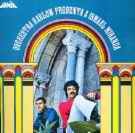
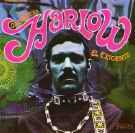
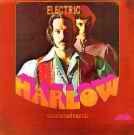
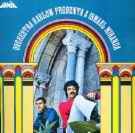
Interview to Larry Harlow


Larry Harlow is a master legend of Latin music we now call Salsa. He began studying music at the age of 5, following his father's footsteps. He studied at the most prestigious music schools. During mid 50’s, he was so fascinated by Latin rhythms that he travelled and lived in Cuba to study the real Afro-Cuban sound that became known as "Salsa". As an expert "Salsa" artist, he returned to New York to develop his own style and orchestra and later to help create the internationally famous "Fania All Stars" group. While a member and producer of the Fania All Stars for fifteen years, Larry Harlow was not only a recording star with 30 solo albums and 15 with the All Stars, but also a producer of over 160 recordings for other artists.


You grew up in Spanish Harlem. Is this the reason you got involved in Latin Music?
I grew up in Brooklyn, went to high school in Harlem and was first exposed to Musica Latina there.

How important was the decision to go to Cuba in the late 50’s to learn all the principles of Afro Cuban Music right up to the Popular Dances, and how did it influence the formation of your own Latin Style and Salsa too.
Went to Cuba on a Christmas vacation in 1956 for the first time with Mambonicks Kids who were into Latin dancing and music.

Then you formed your first band?
Started Orquestra Harlow in 1964 after several trips to Cuba and years of playing as a sideman with various
bands in NYC area.

What were your first musical influences?
Joe Loce, Noro Morales, Early TP Piccadilly boys and later the big band, Machito and all the Jazz greats.

How did it come about that a not-Latino, became the most important man in Latin Music?
I got very good at what I do. Created new, fresh ideas and developed young artists for recordings. I also studied audio engineering and became a prolific producer of Latin recordings.

Everybody knows you for your six golden records and your four Billboard awards: Pianist of the Year, Latin Producer of the Year, Concert of the Year and Arranger of the year. You are also well known for being the first Latin Music artist to use psychedelic lights at your concerts, adding a completely different element to the scene. I really like this thing. Can you tell me something about that?
When it was in to be psychedelic, I made a light tower that was portable and taught a young guy how to operate them. Wrote a song about them and it kept us working for about 2 years. I also was into the whole ear as well as clothing and drugs.

What are your memories of your experience of the Fania period?
Everything!

You play a lot of instruments like Oboe, Bass, Flute, Vibraphone and of course the Piano, was this important to the Latin Sound change that you introduced, trombones playing together with trumpets, a sound that everybody copied later on?
NO, I just wanted to have a different sound. No one had utilized the trumpet/trombone sound before in a salsa format. Today it is standard.

You were one of the creators of the Fania All Stars and together with this band you released 15 LP’s. How did the creation of the band come about?
Well I did not put the band together, Pacheco did that along with Masucci. The idea of an all-star band and a movie to promote them was mine. The formula was simple: Bandleader / singer / sideman from each of the main Fania orchestras.

Can you tell me something that no one knows about the “Our Latin Thing” film project? Some out-takes or some little known moments.
There are hundreds, we worked for one year, Leon and myself, razor blade cutting by hand, the first Fania film, no one made any money but we had a lot of fun and all became stars because of this film.

What does it feel like to play in front of 80,000 people who know "Lucumi" music, what is the archetype of Mambo / Salsa music?
Unfortunatly the public in Zaire were not into the "Lucumi music scene". The tourists were there for the fight and we were there to entertain them. The experience was awesome and seeing Africa for the first time was wonderful especially performing and mixing with all those great musicians and entertainers for 10 days.

Tell me your impressions of the 3 day concert in Africa, about James Brown, the Jazz Crusaders and Mohammed Alì, what were your feelings?
It was the experience of a lifetime. Not only the music but to hang with all those great stars and get to know them. Even with Ali and Foreman, who knew that Bundidi Brown was a great stride piano player, we spent hours together and to visit the Presidential Palace and museums were wonderful.

What do you think about the younger generation now looking for your 60’s and 70’s albums and 45’s to play them, not in Salsa and Soul clubs, but in R’n’B clubs?
I think it is great that another generation is using the genre for something.

What do you think about the fusion between Funk and Latin music in the 70’s? Did you ever experiment with Latin Funk?
Had a band called Ambergris in 69-70 signed to Paramount records that combined Latin and Funk. Was a passing fad.

What do you think about today’s electronic music using samples of 60’s and 70’s Latin music to create a new evolution of Latin Sounds?
I hope they don’t forget to send a royalty check… Not my cup of tea.

Do you have any plans for the immediate future? Albums, tours, films, works?
I will do Hommy opera again in Puerto Rico with different singers and some new music. Playing some Latin Jazz lately, producing some new artists and experimenting with video conferencing music programs to universities around the globe.

Labels: , , , , , , , , ,

Thursday, November 02, 2006

interview to Airto Moreira


This time I would like to propose a chat with one of the Jazz legends I always love because of his way to be a kind of a magical percussion player , a guru .And when i met him , my sensation was to talk to a Witchdoctor... I had the chance of hearing Airto play as a guest star for an Italian group and I thought about talking to him to find out a bit more about a side of him that is little known to the public. Airto Moreira is known above all for his collaborations with Miles Davis, Weather Report and many other Jazz musicians such as Chick Corea or John McLaughlin or Keith Jarrett or even Quincy Jones, Paul Simon, Chicago, Herbie Hancock etc.. In this brief discussion I wanted to focus on the Brazilian period before he went off to New York and met all of the above mentioned names that made him become somewhat of a legend. We also spoke of New York, it was inevitable!

I am very interested in your starting out period when you played in groups such as Sambalanco Trio in 1965 with Cesar Camargo Mariano on piano and Humberto Clayber on bass or with the Sambrasa Trio also in 1965 with Hermeto Pascoal where you played the drums and this trio was very different from the others because its sound was very innovative and very articulate, simple but creative at the same time.

It’s true, here also there was much space and we were very young and ambition was sky high, we had much space up until Cesar at a certain point decided to leave the Sambalanco Trio for a singer called Marisa. We asked him to stay but he was convinced and in love, he wanted to start producing records for Marisa and so he left. Speaking with Hermeto it came out that he really liked our sound and so we decided to ask him to join us. Hermeto joined up on the condition that we changed the name from the Sambalanco Trio to the Sambrasa Trio, we agreed and with his Flute playing the sound became even richer and new, that’s when Flora Purim began singing with us.

The record entitled “Quarteto Novo” in 1967 changed the face of Brazilian music. The sound was very pure, classic but innovative at the same time. That quartet didn’t last very long, what do you remember about that period?

It was a very happy period and musically deep, the group was riding high and everybody couldn’t wait to get into the studio and play, experiment and create. The lovely thing was that, once again, there was enough room for everybody’s creativeness.

Then, after that period, Flora Purim went to New York and you followed her some time after. How did two Brazilians feel in New York?

It was fantastic, it was like being in a film and we were a part of that film. I was 23 and had difficulties because I didn’t speak English. Then we began to meet musicians like JJ Johnson, Cedar Walton and the bass player Walter Booket, then thanks to Walter we began playing with Adderley, Lee Morgan and Paul Desmon as well as Zawinul who put me onto Davis.

There started something that everybody calls ‘Jazz Fusion’ and albums like “Free” and “Fingers” were the start of this sound. The mixture between the sound of Jazz musicians like Hubert Laws or Ron Carter from CTI along with your typical touch created this kind of new sound, how would you define it?

I would simply define it as ‘Brazilian Jazz’.

You have collaborated with many musicians as a percussionist but also as a producer, I would like to ask you something about one of your productions that is very dear to me: “Amazon” by Cal Tjader from 1976?

In the beginning it was very hard work, this record united typical Californian Latin jazz with Brazilian influences. We worked on the project for more than three weeks and the result was amazing, I remember well Cal, when I see the cover it still moves me a lot, it was a great time.

What future projects do you have, are you recording anything?

Flora and myself are continuously recording, we then propose the material to labels for its publication. At the moment I am starting a 3 week tour of Japan and USA with Chick Corea and Eddie Gomez.

Ray Barretto sadly passed away not too long ago, he was also a great percussionist, did you know him?

Yes I knew him, Ray was a brilliant percussionist as well as a great person, the last time I saw him was two years ago in Barbados where we were both there for playing, we crossed each others paths quickly and then I never saw him again.

As you have probably understood Airto, just like all of the others who I have had the pleasure of interviewing, is a very simple person. His way of being made you feel that you were talking to some kind of saint or Macumbero, an experience that once again enriched my Soul Beat spirit, I hope it did the same for you. Peace all over the land.

Labels: , , , , , , , , ,

Tuesday, October 31, 2006

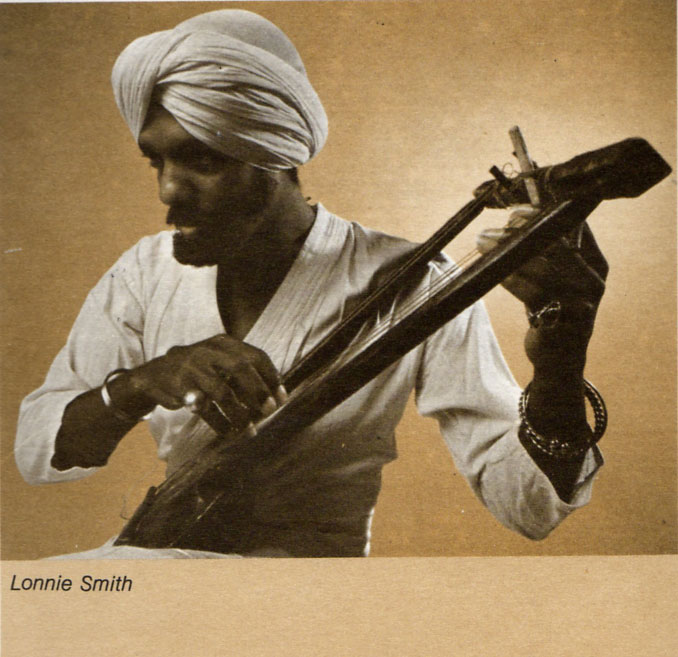
interview to Dr Lonnie Smith


I got the idea to ring and chat with DR Lonnie Smith after visiting his website and finding out about his participation at Umbria Jazz 2006. Many of his records like “Afro-Desia”, “Move Your Hand” or “Finger Lickin’ Good Soul Organ” make up much of my DJ set playlist and so for me it was a great honour to be able to have a friendly chat with a legend of Hammond Jazz and a favourite organist of mine.Lonnie Smith has been on the front line of the jazz scene since 1967. He’s collaborated with Lou Donaldson, David Newman, Blue Mitchell, Joe Lavano , George Benson, Jack McDuff , Dizzy Gillespie, Grover Washington Jr, Ron Carter, Jimmy McGriff, Leon Thomas amongst others. He’s recorded and appeared on over 70 records.He’s also well known for his work with the R’n’B and Soul greats like Gladys Knight, Dionne Warwick, Etta James, The Impressions and the Coasters.DR Lonnie Smith has recently been awarded “Best Jazz Organist” 2003/2004/2005 by the Jazz Journalist Association.Today, Smith continues to play throughout Europe, America and The Far East. Keep an eye on your paper because he regularly appears and plays in small Jazz Bar venues.
As always i find an incredible humble person....


How did you start playing Jazz music?
Mine was a family of singers. In the beginning I sang in Pop groups. When, in a church, I heard the organ for the first time I was gripped by the sound of this instrument and I feel in love with it. I was also very taken by Jazz music and when I heard guys like Wild Bill Davies and Jimmy Smith, I said to myself that that was the music I had to make from that moment on.My problem was that I didn’t know how to play Jazz music, so I used the experience I had to start playing this type of music, starting from what I knew, and that was Pop music.

And so you took to the Hammond...
When I was a kid I’d always go to Art Kubera’s musical instruments shop in Buffalo, every day, like it was my job, I’d go there in the morning and leave in the evening, just to see and look at the Hammond organs.One day I found the shop closed and just as I was leaving the owner calls me round the back and tells me: ”You see that organ? Take it, it’s yours” I couldn’t believe it, it was a brand new organ that was worth a lot of money.From then on I started playing it by ear because I couldn’t read music, and by making use of my experience with Motown, Soul and Pop and what I heard from Smith and Davies. I started playing in all the Jazz Music Jam Sessions and started to get myself noticed. That man was angel for me and he completely changed my life. Even today when I see him, we talk about this thing that happened many years ago.

You’ve worked many times with George Benson amongst others. How did you two meet?
I met Benson through other people, during a Jack Mc Duff concert. George was playing with him. Jack called me onstage and Benson was taken by the way I played.At the end of the concert we got to know each other and he asked me for my phone number.After a while, I got to know that he was looking for me because he had left McDuff but had lost my number, so through Jimmy Boyd, a manager that hung out at “Smiles Paradise” club and who had also arranged for me to play with Grant Green, he was able to contact me.And that’s how I started playing with George Benson.

Tell me a story about that period...
After we’d become friends we found ourselves in his mother’s house in Pittsburgh and we went into the cellar. That day we ended up rehearsing two songs “Secret Love” and “Clockwise” and our band was born.After a while that we’d been playing here and there, some managers from Columbia heard us and signed us both up. For Columbia I recorded “Finger-Lickin’ Good Soul Organ”.

I know that you were much sought after as an organist at that time.
At that time you’d play a lot with everybody, David Newman, Blue Mitchell, Lee Morgan, King Kurtis, Lou Donaldson and Grant Green amongst others I played on many Donaldson albums up until Blue Note asked me to record my own: “Move Your Hand”, “Turning Point”, “Think!”, and “Drives”. In a few of the tracks on those albums you can hear a lot of the origins of Pop Soul like “Sunshine Superman” and “Spinning Wheels”. I then recorded with Grove Merchant up until 1976 and so on.

Which musician have you had most feeling with and created most?
During my career I have played with many musicians and continue to do so till this day. Without a doubt Donaldson is the one with which I had an extraordinary rapport, almost like a marriage. Lou and I are still very close and our friendship is incredible .

As you are still very actively playing, what do you think of this new explosion of 60’s Soul Jazz, / Boogaloo?
I’m stupefied to see that today many people and many youngsters listen to music that we wrote in the 60’s.At that time I would never have thought that our music would have such a long life. Just think, Lou and I are still playing “Alligator Boogaloo” (1967).

What are your future projects? Are you coming to Italy?
My dream would be to create a sort of resting place for Jazz musicians; many don’t have insurance or pensions. I’m playing all over, a lot; I’ll be in Italy for Umbria Jazz in July.

Labels: , , , , , , , , , , , ,

Free Web Counter
Free Counter