Monday, April 09, 2007

JIMMY SMITH


Nowadays organic products can be found in all shops that are biological and non but just as out bodies need to be nourished by genuine products of quality our minds are also ever more in need of sound culture. Many times in the past I have spoken to you about an instrument that made history in the music of Soul, Jazz, Blues, R’n’B and never like today has it been used, sampled and sought after. Many times I have talked about who used it, who sought it out and who sampled it but I have only slightly mentioned who made it indispensable, innovative and a cult object. Jimmy Smith, born in December 1928 and sadly passed away just a few months ago started to play the Piano with his father in the 1940’s. In 1947, after leaving school early, he decided to enlist at the Ornstein School Of Music where he learned Bass and studied deeper the Piano. Smith was noticed through his knack of playing pieces by Brahms, Minuet’s and small Waltzes just through his hearing as he had never learned to read sheet music, this carried on until the teachers became very surprised indeed. After leaving the school and playing Bump Piano in an orchestra of Philadelphia, in 1951 he united with Don Gardner’s Sonotones playing R’n’B Piano. In this situation Jimmy didn’t feel completely at home and it was after he heard at the Harlem Club the great Wild Bill Davies known as ‘the king of the Hammond’ in that period that he decided to start experimenting with this new instrument… Smith borrowed heavily from the style of Bill Doggett from whom he had understood that it was better to use the Organ pedals with your heal because using the front of the foot would tire you very quickly whilst the heal offered more duration and resistance. After closing himself for a long time in his basement Smith came out with a new sound, ready to experiment. A new Jazz story was about to begin. On his new B3 model Smith used the first three drawbars and the percussion, cutting the tremolo, starting to play horn lines with the right hand after being inspired by musicians such as Coleman Hawkins, Arnett Cobb and Don Byas, it was 1955. Smith constructed his Organ solos through inspirations of horn solos: the first and last four drawbars and tremolo on! Jimmy Smith created his first Organ Jazz Trio and completely changed the sound of the moment. In 1956 he began recording for Blue Note until almost 1963 with a total of almost 30 LP’s, he then moved over to Verve until 1972 when he moved onto Elektra, Decca, Mercury, Milestone, Somethin’ Else, Mojo, Metro, Polygram right up to 2004 when he came out with his very last album “Blues Dot Com” that he recorded for Verve Blue Thumb in Los Angeles with the help of musicians of the calibre of BB King, Taj Mahal, Etta James, Dr John, Harvey Mason and others. Getting back to his sound we could say that it wandered greatly amongst the Jazz ambient, fro orchestral trio right up to Funky Jazz in the mid seventies whilst still maintaining his unmistakable sound that even today inspires many organ players. To get a good idea of his sound there are not enough pages in this magazine, I will however try and break down to the minimum some serious indications without having you go out and get some of those usual compilations. From the Blue Note period I recommend “Groovin’ At Small’Paradise” from 1957, “Home Cookin’” from 1958 and “Crazy Baby” from 1960. Then on Verve, probably the label that made him most famous, I would recommend the classic “The Cat” from 1964, “Got My Mojo Working” from 1965, “Organ Grinder Swing” also from 1965 and “Root Down” from 1972 where you can hear that typical Starsky & Hutch type Funky Jazz Organ. A great album that you will rarely see amongst the official discography of Smith and one that I would very strongly recommend is “Unfinished Business” from 1978 on Mercury. I hope that I have pleased and ‘organ-ized’ you for a new search for good vinyl. Jimmy , rest in peace.

Labels: , ,

Sunday, December 17, 2006

Introducing Marva Whitney and Her essential Funk 45's


Introduction to Marva Whitney – The Lady Of Funk

After a lot of Great men now it's time to speak to a Lady , the first Lady of Funk.
Friends and Guests of Jazzmotel I'm proud to introduce you Marva Whitney .
As always i dont know how introduce this kind of personalities , so many things to say ....so Great persons and Artists.
The James Brown experience , her own career , Alfred Pee Wee Ellis , Tommy and The Derbys (who rose to fame with Charles Wright & The Watts 103rd Street Rhythm Band) , "Live At The Apollo Volume II".
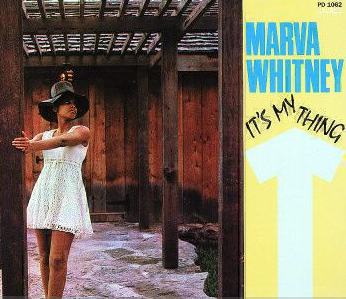
His record " It's my thing" spent seven weeks in Billboard's US R&B Hot 100, peaking at #19 in the summer of 1969 (#82 Pop).Other records like" Things Got To Get Better" and "I Made A Mistake Because It's Only You", made their presence too on the US R&B Top 40.
My favourite are " Unwind Yourself " and " I’m Tired I’m Tired I’m Tired" .
Now she's back with a great band and a lot of news so have a read on this Interview DJ Pari kindly maked me do and have a look at her site on the links section.
love!


Marva Whitney essential Funk 45's


2006
I am what I am P.1 / I am what I am P.2
RDVB-025

1967
Your love was good for me / Saving my time for my baby
Federal, F12545

1967
If you love me / Your love was good for me
King, K6124

1968
Undwind yourself / If you love me
King, K6146

1968
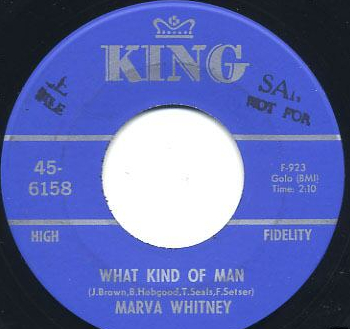
Your love was good for me / What kind of man
King, K6158

1968
Things got to get better (get together) / What kind of man
King, K6168

1968
I'll work it out / All my love belongs to you
King, K6181

1968
I'm tired, I'm tired, I'm tired / If you love me
King, K6193

1968
What do I have to do to prove my love to you / Your love was good for me
King, K6202

1968
Tit for tat (Ain't no takin' back) / In the middle (Instr.)
King, K6206

1969
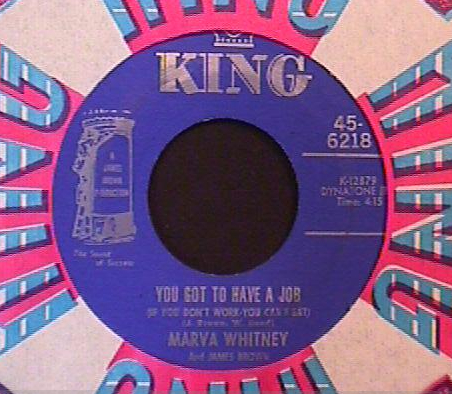
You gotta have a job (with James Brown) / I'm tired, I'm tired, I'm tired
King, K6218

1969
It's my thing / Ball of Fire
King, K6229

1969
Things got to get better (Get together) / Get out of my life
King, K6249

1969
I made a mistake because it's only you P.1 / P.2
King, K6268

1970
He's the one / This girl's in love with you
King, K6283

Labels: , , , , , , , , , , , ,

Sunday, December 10, 2006

Interview to Brian Auger


Im proud and excite to introduce to you another of my chats with a great Organist and Pianist that need no presentation ...Brian Auger , his Organ style groove us from the 60's till now !
Trinity , Oblivion Express , The Steampacket and all the London scene !
I hope you enjoy this interview i did .


Whats you favourite Bands and your musical tastes in the beginning and now ?


My Favourite bands early on were Art Blakey's Jazz Messengers, Miles Davis, John Coltrane, Blood Sweat & Tears, Steely Dan, Yes, Led Zeppelin, Mothers of Invention, Herbie Hancock Quintet, Aretha Franklin, Donnie Hathaway, Stevie Wonder, Marvin Gaye and many many
more.
Today Tears for Fears, Brand New Heavies, Incognito, Jamiroquai, John Mayer, Coldplay, Foo Fighters, Down To The Bone. etc etc.


Can you tell me about when you decide to move from Jazz and Piano to join Organ and R'n'B ?


I switched to the R&B/ Rock scene in 1964 and bought my first Hammond Organ in Early 1965. I have not left the Jazz Scene and I incorporate much Jazz in my music, and play on many Jazz Festivals. I also never left the piano and still play piano pieces every night on tour.


Flamingo Club in London was one of the many Clubs in where you played , how was the Club vibe in the 60's , which were the Sound of that period .


The three most influential clubs in Central London in the 60s were The Ronnie Scott Club ( strictly Jazz, and still going), The Flamingo, (home of the R&B organ based bands) and the Marquee Club ( home to Jazz, Blues and the new pop bands like The Who, Spencer Davis Group, The Steampacket, The Move etc etc. As one of the only musicians that played in all three clubs, always liked the Flamingo for its mixed audience of English kids, West Indian fans and American soldiers and airmen who came into London on the weekends. This was a dancing audience and had the best atmosphere.


I saw an Auger Driscol Compilation called " The Mod Years " , whats your relation with Mods ?


My connection with Mods began in the Steampacket. We wore tailored suits and Carnaby Street clothes and the public called us Mods for our "modern Style of Stage Wear'. Indeed the unknown Rod Stewart who really started his career in the Steampacket became known as Rod the Mod.


What you remeber about the Steampacket period and Long John Baltry , Stewart and Jules ?


Steampacket was a great group. The first Supergroup. Unfortunately there were three managers, one for Baldry, one for Rod and one for myself and Julie. This caused a lot of problems and we never got to record properly because we were all on different labels. The only tracks available were pirated.


Then the Trinity with Auger and Driscoll in '66 , "Open" in '67 and so on , did you get the feeling to be starting a group like that ?


At the end of the Steampacket, I already knew that I wanted to start a band that would be a bridge between the separate scenes of Jazz and Rock. I wanted a rhythm section that could play funky R&B + jazz and I wanted to put Organ Solos on that base using my Jazz Harmony chords and with a positive vocal message. This was the Trinity, the first band of its genre to headline the Montreux Jazz Festival , The Berlin Jazz Festival, The Rome Jazz Festival , and all in 1968 with our first album OPEN and our single SAVE ME.


How did you define the Trinity Sound and how the Oblivion Express sound ?


The sound of the Trinity and the sound of Oblivion Express were pointed out in the recording studio. I simply tried to make sure that everything that was played by each musician was clearly heard, and a little reverb was added. I am not a Phil Spectre who is trying to create a particular sound to every one of his recordings.


When and how you decide to form the Oblivion Express ?


After the Trinity broke up in 1970, I really wanted to push the musical envelope and develop the Jazz Fusion music that I had started.
As this meant that I would be going against the wishes of the record company who wanted more and more commercial music, I thought I was going the quickest way to Oblivion,( Oblio) so I called the band The Oblivion Express, (Il Rapido a Oblio). We are still going, but now with my Daughter Savannah on Vocals, and my son Karma on drums. This is the happiest Express so far.


I know you played a lot in Italy and also that you speak Italian , tell me something about your Italian side .


I first came to Italy as a student when I was 16 years old and instantly loved Italy and the Italian people. In 1967 I came back as a musician to play in a club in Milano and met my wife, who is from Cagliari Sardegna. This was the best thing that ever happened to me.I already had studied French and Latin at college, and Italian came easily for me. My connection with the Italian fans grows stronger every year, and I sent my three children to study in Italy so my whole family speaks fluent Italian.


Can you tell me something special , a funny thing or a story about your B3 ?


My Hammond B3 in the USA, originally was built in London England, but when I moved to the US, I had to install an American tone generator in it. So it is the only Anglo American Hammond that I know about.


Whats your future plans ?


My future plans are to play live with my band until I leave the Planet.

Labels: , , , , , , ,

Sunday, November 26, 2006

Our Latin Thing featuring Fania all Stars film review


A few kids playing on a rooftop in Spanish Harem and one of them, to the sound of the Wah Wah Rhodes of “Cucinando” by Ray Barretto, leaves the group and begins to run. Through side streets, avenues, right up to a wall where you can read names written in a 70’s style Street Graffiti, names like Ray Barretto, Larry Harlow, Willie Colon, Ismael Miranda, Jerry Masucci and Ricardo Ray as well as the title “Our Latin Thing”. As many of you have already understood this month I want to talk to you about a documentary by Leon Gast of which the theme was the Hispanic music phenomenon in the ghettos of Harlem at the beginning of the 70’s. Thanks to Vampisoul, a Spanish label, it is back onto the market (in a DVD version) called “Our Latin Thing, Nuestra Cosa” and offers all of us lovers the possibility of seeing and tasting the ‘authentic’ story of Latin music, something with contaminations from Africa, Cuba, Puerto Rico, Jazz… well, ‘hybrid music’. Vampisoul is, and always has been, one of the more attentive labels in its selection as well as specialising in the distribution of lost tracks from musical styles such as Latin, soul, funk, r’n’b and groove from the 60’s and 70’s because it sources out and represses excellent taste pieces of vinyl of the highest quality. To note also that this label has brought back onto the market, after 20 years, one of the symbols of Latin Soul, ‘The Ordinary Guy, Mr. New York’ Joe Bataan with his newest incredible album entitled “Call My Name”. Getting back to New York though… The principal protagonists of this documentary-film are the Fania All-Stars come along with those people who at this period in time were and integral part and daily ‘animation’ for Spanish Harlem in New York. Jerry Masucci, boss of Fania (a leading label for Latin Music) and Larry Harlow (‘El Judio Meravilloso, The Wonderful Jew’, one of the musicians, better still, the musician that brought Salsa to the whole world) wanted this film to realise a project that had been going ahead for some time: to spread the Latin culture throughout the world. As I said before, to realise this film, filmed in New York in 1972, they called on Leon Gast who was probably the only person capable of collecting together the whole essence of everyday life and transforming it with a touch of cinematic sense. The film starts off with a rehearsal inside a ballroom where the Fania All-Stars are trying out there songs on a few spectators, amongst which two very cool dancers. Between some improvised interviews with Ray Barretto and a cut to some kids who were banging tin cans as though they were conga drums, you could already make out the documentary taste of Gast. The street scenes are also very present: a slightly beat young man with another slightly drunk walk alone in the streets improvising a ‘few moves’ with a passing young lady; the percussionist Ray Barretto as a make believe ice cream man breaking up ice to make ice pops for the kids; the people are gathering in the streets to hear the Harlow Orchestra with the singer Ismael Miranda playing their latest song Proto Salsa directed by Larry Harlow and his electric piano. To note that the Harlow Orchestra played on the steps of one of those classic households in Harlem between rubbish bins and people who were shouting out. After filming a clandestine cock fight in a kind of basement as well as a kind of African or Voodoo rite beneath an underpass, Gast goes back to the ballroom where the Fania are ready for the announced concert with its very eager Hispanic-American audience. “Estrelle De Fania” and all of their pieces of the moment are played including trumpet solos, conga drums solos, Latin choruses and couples dancing or others on their own making moves that would make any modern day Salsa maestro jealous. Trumpets and trombones together, as the rules of the Harlow Orchestra or Johnny Pacheco state, looking after the orchestration of the band (an orchestration that was taken as an example by all Salsa groups in the future). All this as Larry Harlow made me understand initially cost 5000 dollars, almost a years work leaving very little pay for the artists, it was however very important in other ways: it sent Salsa as well as all of the Fania artists into stratosphere making the Hispanic community famous and respected throughout the world.
Thanks to Vampisoul for gave me the Video .

Labels: , , , , , , , , ,

Tuesday, October 31, 2006

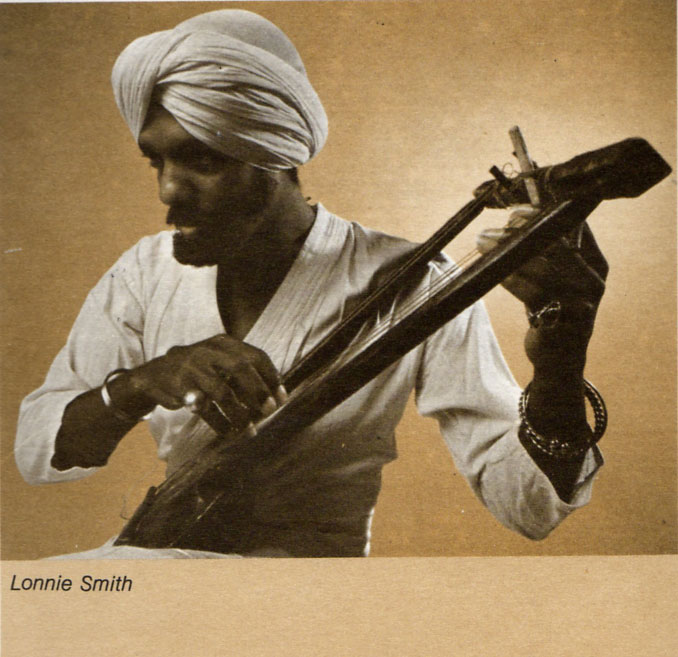
interview to Dr Lonnie Smith


I got the idea to ring and chat with DR Lonnie Smith after visiting his website and finding out about his participation at Umbria Jazz 2006. Many of his records like “Afro-Desia”, “Move Your Hand” or “Finger Lickin’ Good Soul Organ” make up much of my DJ set playlist and so for me it was a great honour to be able to have a friendly chat with a legend of Hammond Jazz and a favourite organist of mine.Lonnie Smith has been on the front line of the jazz scene since 1967. He’s collaborated with Lou Donaldson, David Newman, Blue Mitchell, Joe Lavano , George Benson, Jack McDuff , Dizzy Gillespie, Grover Washington Jr, Ron Carter, Jimmy McGriff, Leon Thomas amongst others. He’s recorded and appeared on over 70 records.He’s also well known for his work with the R’n’B and Soul greats like Gladys Knight, Dionne Warwick, Etta James, The Impressions and the Coasters.DR Lonnie Smith has recently been awarded “Best Jazz Organist” 2003/2004/2005 by the Jazz Journalist Association.Today, Smith continues to play throughout Europe, America and The Far East. Keep an eye on your paper because he regularly appears and plays in small Jazz Bar venues.
As always i find an incredible humble person....


How did you start playing Jazz music?
Mine was a family of singers. In the beginning I sang in Pop groups. When, in a church, I heard the organ for the first time I was gripped by the sound of this instrument and I feel in love with it. I was also very taken by Jazz music and when I heard guys like Wild Bill Davies and Jimmy Smith, I said to myself that that was the music I had to make from that moment on.My problem was that I didn’t know how to play Jazz music, so I used the experience I had to start playing this type of music, starting from what I knew, and that was Pop music.

And so you took to the Hammond...
When I was a kid I’d always go to Art Kubera’s musical instruments shop in Buffalo, every day, like it was my job, I’d go there in the morning and leave in the evening, just to see and look at the Hammond organs.One day I found the shop closed and just as I was leaving the owner calls me round the back and tells me: ”You see that organ? Take it, it’s yours” I couldn’t believe it, it was a brand new organ that was worth a lot of money.From then on I started playing it by ear because I couldn’t read music, and by making use of my experience with Motown, Soul and Pop and what I heard from Smith and Davies. I started playing in all the Jazz Music Jam Sessions and started to get myself noticed. That man was angel for me and he completely changed my life. Even today when I see him, we talk about this thing that happened many years ago.

You’ve worked many times with George Benson amongst others. How did you two meet?
I met Benson through other people, during a Jack Mc Duff concert. George was playing with him. Jack called me onstage and Benson was taken by the way I played.At the end of the concert we got to know each other and he asked me for my phone number.After a while, I got to know that he was looking for me because he had left McDuff but had lost my number, so through Jimmy Boyd, a manager that hung out at “Smiles Paradise” club and who had also arranged for me to play with Grant Green, he was able to contact me.And that’s how I started playing with George Benson.

Tell me a story about that period...
After we’d become friends we found ourselves in his mother’s house in Pittsburgh and we went into the cellar. That day we ended up rehearsing two songs “Secret Love” and “Clockwise” and our band was born.After a while that we’d been playing here and there, some managers from Columbia heard us and signed us both up. For Columbia I recorded “Finger-Lickin’ Good Soul Organ”.

I know that you were much sought after as an organist at that time.
At that time you’d play a lot with everybody, David Newman, Blue Mitchell, Lee Morgan, King Kurtis, Lou Donaldson and Grant Green amongst others I played on many Donaldson albums up until Blue Note asked me to record my own: “Move Your Hand”, “Turning Point”, “Think!”, and “Drives”. In a few of the tracks on those albums you can hear a lot of the origins of Pop Soul like “Sunshine Superman” and “Spinning Wheels”. I then recorded with Grove Merchant up until 1976 and so on.

Which musician have you had most feeling with and created most?
During my career I have played with many musicians and continue to do so till this day. Without a doubt Donaldson is the one with which I had an extraordinary rapport, almost like a marriage. Lou and I are still very close and our friendship is incredible .

As you are still very actively playing, what do you think of this new explosion of 60’s Soul Jazz, / Boogaloo?
I’m stupefied to see that today many people and many youngsters listen to music that we wrote in the 60’s.At that time I would never have thought that our music would have such a long life. Just think, Lou and I are still playing “Alligator Boogaloo” (1967).

What are your future projects? Are you coming to Italy?
My dream would be to create a sort of resting place for Jazz musicians; many don’t have insurance or pensions. I’m playing all over, a lot; I’ll be in Italy for Umbria Jazz in July.

Labels: , , , , , , , , , , , ,

Monday, October 30, 2006

Interview to Azymuth


After long time i realize another of my dream , seen Azymuth play'n live.
As always i went there and i ask them " eu preciso de falar com vocè " they sayd " tudo bom !" and we had a chat ....
They were very kind to me more than the club owner ...
Heres what we talked that night ....


How have Azymuth changed from the times of "Samba Doido", "Crazy Samba", nightclub Caneçao, Youngsters, Milton Nascimento, Jorge Ben, Deodato, the music from the soundtrack "O Fabuloso Fittipaldi " in 1973 until now?

Now we have more maturity, we can make it different, our heart is open to the young generations and the new music... At the end the difference is the age and the head addiction! It's like a wine…

Your sound is always contemporary and authentic, what are your inspirations... We know that Bertrami worked with Flora Purim and Robertinho Silva: was this an inspiration for Azymuth?

In the beginning when we were young we were listening to a lot of Jazz Big Bands like Glenn Miller, Duke Ellington etc... Orchestras, a lot of Samba too: we put all this together, it was fantastic.

How important was the label Milestone for your success in America and Europe?
Milestone opened the Doors for the world, for the success, it was very important for Azymuth. We did many LPs with Milestones.

Which work of yours do you consider as your best one: Melo da Cuica, Light as a Feather, Azymuth, Partido novo or Telecomunication?
For me (Ivan Conti) our best work is Telecomunication, its a moment, you know, this album is a memorial time in the studio, very clear, we had the open heads, we talked, a lot of communication. We played everything perfect! This is our favourite one!

How important is the label Far Out for your modern sound?
Far Out brought the Band on the road again. This label is important because it gives us another kind of sound. Some years ago we were stopped for a few and we said "let’s get something new started" and Far Out brought the old Azymuth forward again.

What do you think about remixes producers like Jazzanova, Global Communications, Mark Pritchard, Kenny Dope and 4Hero?
Now I like it very much, in the beginning when I heard these remixes I was very excited but it was strange, we were not so ready to hear this kind of changes, we didn’t understand that at that time. Now we understandthat it’s is a new kind of idea and a new sound and we like it.

You have never stopped making music since 1972, always being up to date yet preserving your typical sound. What’s your secret?
The secret is the respect, the patience for each other, some time we fight, of course, but we always get the other way to create another sound... What’s important is the union and the respect for eachother’s opinions and ideas.

What do you think about the new Brazilian music explosion, DJ’s and producers like Marky, Patife, etc.?
There’s a lot of good music now and a lot of bad too!

One of my favourite tune is Manha from 1975, tell us something about that song.
Manha is good times! Everything fresh in our head, we were young, now we have to run like Forest Gump! Manha is a special time song, I like it too!

Labels: , , , , , , , , , , , , , , ,

Sunday, October 22, 2006

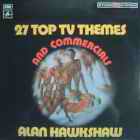
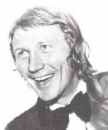
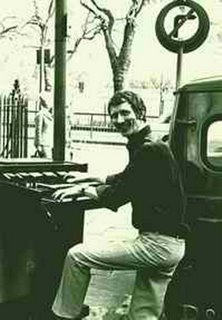
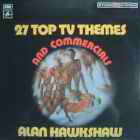
Interview to Alan Hawkshaw


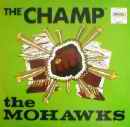
It is roughly 15 years that I delight in selecting, collecting and proposing in the clubs this sound that mixes various sounds such as jazz, Bossa Nova, orchestral r’n’b from the end of the 60’s, soul funk, oriental influences in jazz music, rare grooves, soundtracks, themes and many other kinds of music that has been produced in a range of time that goes from the middle of the 60’s to the beginning of the 70’s. As it is a rather vast subject, after many years spent amongst such sounds there has risen in me the need to define it all with just one definition… thus was born ‘The Soul Beat’, a column where I will touch on, from time to time, all of the above mentioned genres! I will start off by telling you about the so called ‘library’ music, re-discovered recently and created by labels that, giving a free hand to better and less known composers, produced themes (with the help of the cream of session men of the time) that were used as background music for radio or television spots. The labels in questions were CONROY, MONTPARNASSE 2000, DE WOLFE, TELEMUSIC, BURTON, the most famous KPM and many others, Italian also, with whom collaborated names of the calibre of Umiliani, Morricone and Alessandroni! The re-discovery came about around 94 when three English DJ’s, with their “The Sound Gallery” compilation, brought back in a big way great grooves and great composers. It was however the DJ’s from Blow Up in London who found the skein in the web by launching “Exclusive Blends” that put into evidence the KPM label, putting up the prices even to this day (and who knows for how much longer)… Think about it a KPM could cost anything up to £150! The sound was very varied and touched on easy listening, pop, jazz, Bossa, beat, jazz funk and soul but it also wasn’t rare to find some ethnic or experimental sounds. There is nothing better now than to give you a run down of some of the more significant KPM’s that I have picked up throughout Europe or the most significant composers starting off with the mythical Alan Hawkshaw, an organist who composed, together with Keith Mansfield and Alan Parker in the KPM ‘green’ or ‘1000’ series, the most costly and sought after pieces, “Move Move Move”, “Soul Organ Impromptu”, “Beat Me Till I’m Blue”, “Dr Jekyll & Mr Hyde Park”, “Senior Thump” or “The Storm”, some of which are contained on a very rare and very expensive album from the Mohawks (1968 – PAMA Records) where Hawkshaw played under the The Hawk name, re-discovered in the 80’s becoming celebrated with that organ riff “The Champ” that made hip-hop history (see KRS ONE and others). Many groups today, such as Corduroy, Jtq or Big Boss Men, have clearly been influenced by the ‘KPM Big beat’, also many DJ’s and collectors search for these pieces in places such as on line auctions in an effort to enrich their own collections, to drive the floors wild and, above all, to have new samples of drums, bass and various grooves… For those who are looking for KPM I will list a few titles: The Essential KPM’s 1000 series > Flamboyant Themes Vol. I, II, III, IV, Gentle Sound Vol. I, Flute For Moderns, Accent On Percussion, The Big Beat Vol. I and Vol. II, Music For A Young Generation, The Sound Of Pop, Beat Incidental and Colours In Rhythm. The Essential Composers > Alan Hawkshaw, Alan Parker, Alan Moorhouse, Keith Mansfield, Syd Dale, Johnny Pearson, Ray Cameron, David Lindup, Johnny Hawksworth.


After a lot of researching i get in touch with Alan Hawkshaw , one of my KPM and Organ player heroes .
I decide to ask him some questions about that music , that period and other things
Alan Hawkshaw were rediscovered in the mid 90's by Blow Up's DJ's for the " Exclusive Blends " Compilations .
Hawkshaw were one of the most wanted Organists during the Library music recordings period in the 60's till mid 70's and he’s still riding now days .
He recorded more than 7000 tracks for labels like KPM , Bruton Music , Music House etc . He was the leader of the mithic band called " Mohawks " , his 60's and 70's recordings are sold today up to 300 UKP and his riffs were sampled by loads of Hip Hop bands .His style is unmistakable songs like " Move Move Move " , " The Champ " , " Beat me till i'm Blue ", "Pepsi " , "Hot Pants", " L.S.D " , "Piccadilly night ride " are now masterpieces .
I had a chat with him trying to understand more about this man wich is not so easy to get informations about

INTERVIEW TO ALAN HAWKSHAW

Lets talk about the Mohawks , how did they born and who were the Mohawks ?we have so less informations about them .

The Mohawks was a scratch session of various well known session
musicians of which I was one. There was no actual band called the
Mohawks. My name on the record is Morris Hawk. Its that simple.

Which musicians did influence you at the beginning of your career ?

Musicians that influenced me early in pre-teens would have been Fats
Waller, Benny Payne, who are both pianists. Jazz pianists continued
to influence me right into my teens and beyond including Oscar
Peterson, George Shearing, Bill Evans, E rrol Garner.

How the relationship between you and KPM started?

An introduction to Robin Phillips who was head of KPM in 1962 by Guy
Fletcher . This led to a long association with Robin through various
other library companies including Music House and Bruton Music.

How do you define the end of 60'S KPM/ Mohawks sound , R'n'B , Pop ...

The Funky sound began to change during the early seventies as other
forms of popular music began to take shape. That it has been revived
in the 21st century is a mystery to me but I am flattered that this
gendre of music has sustained itself all these years.


How the relationship with Keith Mansfield started ?


Keith Mansfield met in the mid sixties while I was still in a rock
group called The Original Checkmates. He used me on most if not all
of his recording session from the mid sixties into the late seventies.


What about the Swinging London feeling we get listening to "Move Move Move" or "Soul Organ Showcase" album . Is still London Swinging now days?

I would say that the term Swinging London applies to the sixties
period. That decade was quite different than any other decade in that
it contained the tidle wave of the Beatles and the subsequent
Liverpool sound plus people were more aware of fashion. Hot Pants,
Flower Power were all part of the culture of that time and with the
advent of boutiques in fashion streets such as Carnaby Street the
term Swinging London encompassed all these elements. It may still be
swinging today but not in the same way as the sixties.


At the Big Beat vol 1/2 recording sessions was you thinking about create music for a spot or an advertisement or to make Youngster dance ?

Big Beat had no ulterior motive other than its energetic content. It
was typical of the music of that period.


You worked with loads of musicians , touching many kind of music , also near Rock things like Rumpletiltskin or the Hawkshaw version of Hair .
How these collaborations happened ?

All the musicians I worked with were part of the London session scene
and we all met on our various day to day sessions, of which I
recorded approximately 7000 during a 13 year period.


What you think about todays Organists wich are inspirate by Hawkshaw Style ?


I am flattered that organists are inspired by my style.


Whats your feeling about knowing that KPM records like "Big Beat vol 2" costs about 200 uk pounds or more?

I know collectors are paying large sums for certain vinyl albums of
the sixties. None of this money ever reaches me by the way.


Did you ever think about a Mohawks / KPM all-stars reunion after the Jazz Cafe success , some years ago?

I'd love to do another Jazz Cafe live concert with the KPM writers
and musicians and this will almost certainly happen within the
forseeable future.

Wich label gived you more creative space ? De Wolfe , KPM , Studio2 ?

KPM was without a doubt the first company to give me free license to
pursue my library writing and playing.


Some days ago KPM all stars played again at Jazz Cafe with a lot of energy and a lot of positive response .

Labels: , , , , , , ,

Free Web Counter
Free Counter