Thursday, December 06, 2007

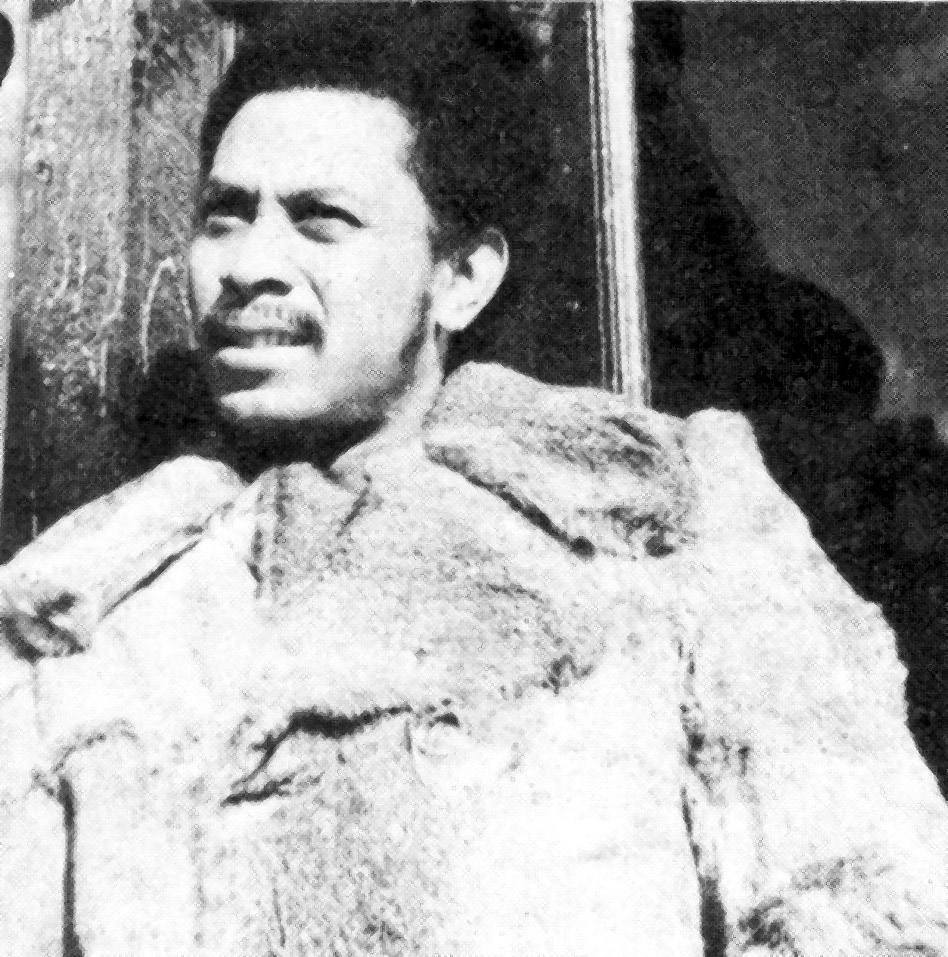
Carlos " Patato " Valdès


I just knew from my Latin friends in America that Patato was not good ...
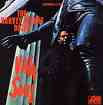
Then i had the bad notice from my friend Harvey Averne that the Great percussion player passed ...
I had a look around to get some infos about Him and I went to see a great article on herencialatina.com.
Nobody could explay better than Herencia Latina , the life , the feelings , the vibe and the story of thig little great Brother !
So I invite you to go there and have a read at this story .
Rest in peace Brother Patato and " beat" them all with your Congas !
Jazzmotel

Labels: , , , , , , , , ,

Monday, April 09, 2007

LATIN BOOGALOO


JAZZMOTEL will be ‘boiling with Soul’ and I will take you into that hot but very fresh sound called Boogaloo than Latin Soul. In America this sound was famous between 1966 and 1969 and was the first contemporary Latin form that got the attention of a vast public that were a bit tired of the usual Cuban, Mambo and Cha Cha rhythms. Boogaloo, thanks to its Funky sound, was liked above all by the Afro-Americans, it was a highly successful fusion because it also ‘involved’ people that, in the past, never knew Latin music. It is said that the genre in question was born out of the interaction of the Afro-American dancers with the Latin musicians of New York who played in the clubs and night clubs of that period. People such as Joe Cuba say that this sound had a very explosive and stinging tone, to the point that pieces like “Bang Bang!” were created to shake up the dancers and, above all, stimulate them because they were no longer responding to the more classic Latin sounds, no, they were looking for something innovative. Many Latin musicians were also influenced by R’n’B and Jazz, and they therefore created a sound that, quoting various critics and musical historians, became a true milestone of Latin music, also because it came up during the high point of the Charanga popularity and just before the Salsa explosion! It was probably Joe Cuba who at the time gave the input (followed by all those who were playing Latin music in New York like Ricardo Ray, Ray Barretto, Pete Rodriguez, Joey Pastrana, Eddie Palmieri, etc.) and that, with this music, managed to create a meeting point between Puerto Ricans and blacks. Boogaloo didn’t have its own specific dance but like other genres of the 60’s it gave the opportunity for you to move freely and, seeing that all the ballroom floors were made of wood, pirouettes and jumps were the nights attraction. When reading your mail I have understood that you are interested in knowing also the names of the musicians (and relative titles) who started off the various sounds, I will get straight onto it by citing the classic “Bang Bang Push Push Push!” by the Joe Cuba Sextet (quite possibly the inventor of Boogaloo?). Instead, my favourite is “Hard Hands” by Ray Barretto (where you can hear the wonderful “Love Beads”), then there is “Acid”, another Barretto, that contains the classic “Soul Drummer” or “Mercy Mercy Baby” (distinguishable by the bassline riff that was sampled by Mighty Bop during the trip hop era). For those who really want to flip out I would recommend two masterpieces that are very close to R’n’B: I am talking about “Land Of Love” by Moon People and “Take A Trip Pussycat” by the Latin Blues Band (a pseudonym of the same Moon People), albums (recorded in 69 on the obscure Speed label) that are really fantastic and indispensable in any respectable collection! Another great interpreter of this genre (and also classic Latin soul) is Joe Bataan who, thanks to his “Subway Joe”, “St. Latin’s Day Massacre” and “Afrofilipino”, became known all over the world. Not to be missed also is “Let’s Get Down To The Nitty Gritty” by Riccardo Ray because it re-produces pop pieces like “Sookie Sookie” and “Mony Mony” (here in a Boogaloo version that is very rhythmic and danceable). Now I will mention some labels on which have been recorded some splendid Boogaloo albums: probably the biggest of them all (as far as New York Latin music is concerned) is Fania, I will also mention Tico, Allegre, Nike, Speed, Mardi Gras, Double Shot, Omega, Polydor and, also, King of James Brown… yes because also some of the Funk and R’n’B stars have been taken over by their rhythms that later came back revisited by or has influenced artists who in turn were contaminated! The James Brown piece most influenced by Boogaloo is “Shhhhhh For A Little While” where the author, something very rare, doesn’t shout out and sing but instead plays the Hammond… Well, if you come across it buy it because in my opinion it is one of the nicest pieces from Brown… maybe even the best! It is now time to say goodbye and invite you to write to me, especially if you have any questions or would like to have further info about the very vast groovy world of JAZZMOTEL.

Labels: , , ,

Sunday, December 17, 2006

Introducing Marva Whitney and Her essential Funk 45's


Introduction to Marva Whitney – The Lady Of Funk

After a lot of Great men now it's time to speak to a Lady , the first Lady of Funk.
Friends and Guests of Jazzmotel I'm proud to introduce you Marva Whitney .
As always i dont know how introduce this kind of personalities , so many things to say ....so Great persons and Artists.
The James Brown experience , her own career , Alfred Pee Wee Ellis , Tommy and The Derbys (who rose to fame with Charles Wright & The Watts 103rd Street Rhythm Band) , "Live At The Apollo Volume II".
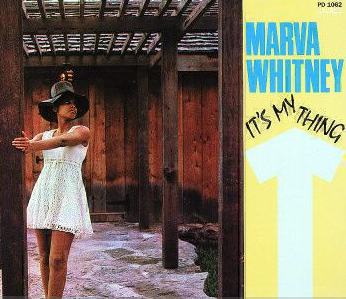
His record " It's my thing" spent seven weeks in Billboard's US R&B Hot 100, peaking at #19 in the summer of 1969 (#82 Pop).Other records like" Things Got To Get Better" and "I Made A Mistake Because It's Only You", made their presence too on the US R&B Top 40.
My favourite are " Unwind Yourself " and " I’m Tired I’m Tired I’m Tired" .
Now she's back with a great band and a lot of news so have a read on this Interview DJ Pari kindly maked me do and have a look at her site on the links section.
love!


Marva Whitney essential Funk 45's


2006
I am what I am P.1 / I am what I am P.2
RDVB-025

1967
Your love was good for me / Saving my time for my baby
Federal, F12545

1967
If you love me / Your love was good for me
King, K6124

1968
Undwind yourself / If you love me
King, K6146

1968
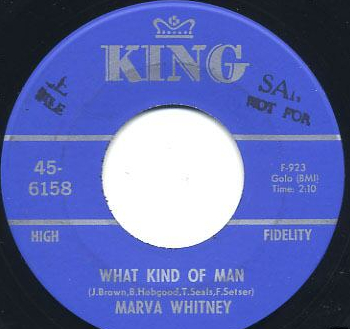
Your love was good for me / What kind of man
King, K6158

1968
Things got to get better (get together) / What kind of man
King, K6168

1968
I'll work it out / All my love belongs to you
King, K6181

1968
I'm tired, I'm tired, I'm tired / If you love me
King, K6193

1968
What do I have to do to prove my love to you / Your love was good for me
King, K6202

1968
Tit for tat (Ain't no takin' back) / In the middle (Instr.)
King, K6206

1969
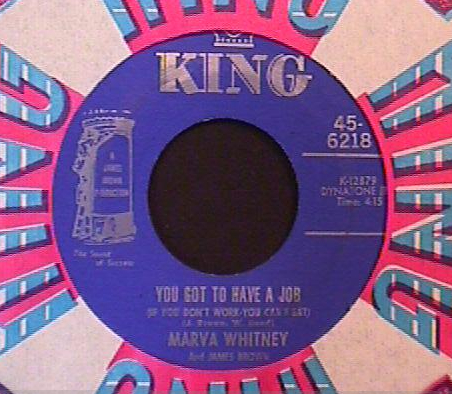
You gotta have a job (with James Brown) / I'm tired, I'm tired, I'm tired
King, K6218

1969
It's my thing / Ball of Fire
King, K6229

1969
Things got to get better (Get together) / Get out of my life
King, K6249

1969
I made a mistake because it's only you P.1 / P.2
King, K6268

1970
He's the one / This girl's in love with you
King, K6283

Labels: , , , , , , , , , , , ,

Thursday, November 23, 2006

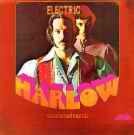
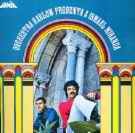
Interview to Larry Harlow


Larry Harlow is a master legend of Latin music we now call Salsa. He began studying music at the age of 5, following his father's footsteps. He studied at the most prestigious music schools. During mid 50’s, he was so fascinated by Latin rhythms that he travelled and lived in Cuba to study the real Afro-Cuban sound that became known as "Salsa". As an expert "Salsa" artist, he returned to New York to develop his own style and orchestra and later to help create the internationally famous "Fania All Stars" group. While a member and producer of the Fania All Stars for fifteen years, Larry Harlow was not only a recording star with 30 solo albums and 15 with the All Stars, but also a producer of over 160 recordings for other artists.


You grew up in Spanish Harlem. Is this the reason you got involved in Latin Music?
I grew up in Brooklyn, went to high school in Harlem and was first exposed to Musica Latina there.

How important was the decision to go to Cuba in the late 50’s to learn all the principles of Afro Cuban Music right up to the Popular Dances, and how did it influence the formation of your own Latin Style and Salsa too.
Went to Cuba on a Christmas vacation in 1956 for the first time with Mambonicks Kids who were into Latin dancing and music.

Then you formed your first band?
Started Orquestra Harlow in 1964 after several trips to Cuba and years of playing as a sideman with various
bands in NYC area.

What were your first musical influences?
Joe Loce, Noro Morales, Early TP Piccadilly boys and later the big band, Machito and all the Jazz greats.

How did it come about that a not-Latino, became the most important man in Latin Music?
I got very good at what I do. Created new, fresh ideas and developed young artists for recordings. I also studied audio engineering and became a prolific producer of Latin recordings.

Everybody knows you for your six golden records and your four Billboard awards: Pianist of the Year, Latin Producer of the Year, Concert of the Year and Arranger of the year. You are also well known for being the first Latin Music artist to use psychedelic lights at your concerts, adding a completely different element to the scene. I really like this thing. Can you tell me something about that?
When it was in to be psychedelic, I made a light tower that was portable and taught a young guy how to operate them. Wrote a song about them and it kept us working for about 2 years. I also was into the whole ear as well as clothing and drugs.

What are your memories of your experience of the Fania period?
Everything!

You play a lot of instruments like Oboe, Bass, Flute, Vibraphone and of course the Piano, was this important to the Latin Sound change that you introduced, trombones playing together with trumpets, a sound that everybody copied later on?
NO, I just wanted to have a different sound. No one had utilized the trumpet/trombone sound before in a salsa format. Today it is standard.

You were one of the creators of the Fania All Stars and together with this band you released 15 LP’s. How did the creation of the band come about?
Well I did not put the band together, Pacheco did that along with Masucci. The idea of an all-star band and a movie to promote them was mine. The formula was simple: Bandleader / singer / sideman from each of the main Fania orchestras.

Can you tell me something that no one knows about the “Our Latin Thing” film project? Some out-takes or some little known moments.
There are hundreds, we worked for one year, Leon and myself, razor blade cutting by hand, the first Fania film, no one made any money but we had a lot of fun and all became stars because of this film.

What does it feel like to play in front of 80,000 people who know "Lucumi" music, what is the archetype of Mambo / Salsa music?
Unfortunatly the public in Zaire were not into the "Lucumi music scene". The tourists were there for the fight and we were there to entertain them. The experience was awesome and seeing Africa for the first time was wonderful especially performing and mixing with all those great musicians and entertainers for 10 days.

Tell me your impressions of the 3 day concert in Africa, about James Brown, the Jazz Crusaders and Mohammed Alì, what were your feelings?
It was the experience of a lifetime. Not only the music but to hang with all those great stars and get to know them. Even with Ali and Foreman, who knew that Bundidi Brown was a great stride piano player, we spent hours together and to visit the Presidential Palace and museums were wonderful.

What do you think about the younger generation now looking for your 60’s and 70’s albums and 45’s to play them, not in Salsa and Soul clubs, but in R’n’B clubs?
I think it is great that another generation is using the genre for something.

What do you think about the fusion between Funk and Latin music in the 70’s? Did you ever experiment with Latin Funk?
Had a band called Ambergris in 69-70 signed to Paramount records that combined Latin and Funk. Was a passing fad.

What do you think about today’s electronic music using samples of 60’s and 70’s Latin music to create a new evolution of Latin Sounds?
I hope they don’t forget to send a royalty check… Not my cup of tea.

Do you have any plans for the immediate future? Albums, tours, films, works?
I will do Hommy opera again in Puerto Rico with different singers and some new music. Playing some Latin Jazz lately, producing some new artists and experimenting with video conferencing music programs to universities around the globe.

Labels: , , , , , , , , ,

Sunday, November 19, 2006

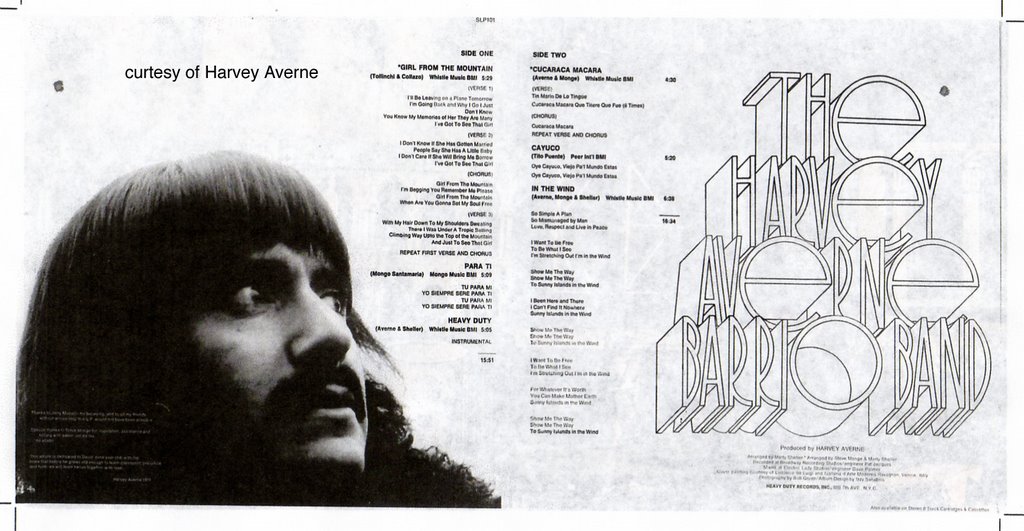
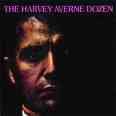
Interview to Harvey Averne


I wanted to have a chat with one of the most refined arranger , composer and musician of the Latin music scene from the 50's till today in New York and the rest of the world .
Harvey Averne create the mix of Latin music together with Soul , Funk and Rock now called Latin Crossover .
His track are researched , collected , compiled and spinned by the most Groovy DJ's from the today 60's scene .
He never liked to be on front so theres no so many information about him , thats why i wanted to know more .
I discovered a great artis and a great man and friend!


You are known as the musician that combined Soul and Rock with Latin music, maintaining, in the process, subtle and refined arrangements. How did you obtain such results?

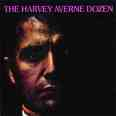
Growing up and living in New York city, which is also known as the great melting pot, I was exposed to latin music at 8 years of age,along with pop and soul, rock came later. Mixing all the elements I love together while keeping the feeling natural & logical was the chalange. Marty Sheller used to play trumpet in my salsa band ( Arvito band) which played pure salsa only, I never wrote an original song or recorded with the Arvito band. We would copy arrangements from records IE: Tito Puente, who was my biggest influence, Cuban recordings etc. Larry Harlow, Eddie Palmieri, Louie Ramierez and many great and talented musicians all played in the Arvito orch. So I guess I had a good eye for talent from the very beginning. The Arvito Band Played dances and clubs including the world famous "Paladium" with all the great latin bands of the day( 1953 thru 1965 . I played vibes & was the band leader. Arvito ( spanish sounding for little Harvey, originally " Harvito" but the" H" was dropped because "Arvito" sounded more spanish. In the late 60s when I started recording for Fania I wanted to combine the all elements to appeal to all audiences and the Harvey Averne Dozen was born. the majority of the arrangements and ideas were in the very capable hands of Marty Sheller, I gave him some ideas, but he understood whatever concept I was cooking up at the time and needed very little guidence, he made it very easy for me. He was my go to guy for all the different" Harvey Averne bands".

You music is often described as Latin Crossover. What do you think?

Yes thats what i was trying to do.

Many of the tracks on your first albums are Pop and Soul covers from that period. What were your musical tastes?

All of the above, salsa, soul, rock, but especially the Beatles, & Sly and the Family Stone,
That is why I always did instrumental versions of thier songs on all my albums but in a very different, highly stylized way, ala the "Harvey Averne Dozen" style which was very original and like no other recording of their great material.

I know that you play the vibraphone and the piano as well as having a fantastic voice. How much has the fact that you
are a musician influenced your career even though you are a producer?

I was never very comfortable performing on stage which is why in 1972 I stopped making the " Harvey Averne" recordings altogether. I was the leader of the " chakachas " in 1972 ( Jungle Fever) which sold over 2 million, we played the Apollo theatre 4 times in 1972 and I was offered to be the head of United Artists Latino lable, I sold my instruments and retired from the stage. I guess I loved Composing, Producing, Mixing ( my love ) promoting, discovering and developing new talent, much more than performing. So to answer your question ( I bet you thought I forgot ) It taught me how to communicate and get the best out of everyone who comes into the studio to work with me.I demand more from talent than they have ever experienced,or gone inside themselves to give before, while I give tremendous freedom and want them to take chances. Remember I fired myself from performing and recording, so YOU better come to workout for me or you know what will happen ( It's not so easy to explain to yourself, when you look in the mirror in the morning, why you got fired by your own self. I love my recordings, but I think the least important element in their success was my playing\performing which did not make me so happy, but in a way limited me. As a producer I work with every facet of the recording, I find this much more important and satisfying.

Marty Sheller, already having arranged for Mongo, worked on a few of your albums. How did the arrangements come about? Was it a two way collaboration or did you occupy yourself with the writing and he with the arrangement?

As I said above the arrangements were the genius of Marty Sheller. We would talk about what was the idea for a song, and Marty would go and make it a much better idea.

You have produced a few of the most sought after albums of Latin Soul - Latin Funk and Boogaloo such as "Camel Walk" by Latinares"or "Cortijo and his Time Machine", right up to
exceptional works by Eddie Palmieri such as "Un Dia Bonito" or "Puerto Rico" and many more. Tell me about your work as a producer.
My best work (for me) has been as a Producer ( which is exactly the same function as a Movie Director, which title was used long before the record business started calling us Producers). A Producer in the movies handles the financing which in the recording industry is the domain of the record company who has the Artist I was hired to Produce under a long term contract usually. My work includes the following, album concept, casting and hiring everyone on the project, directing all performances, which is pretty easy work, because I only work with the very, very, best and get them to suprise themselves and me, because they give me more than their talent, they give me their heart and soul, which you cannot buy for money ever. And after I and everyone is totally happy with their performance. I go into the studio, always alone, to mix, fix, polish,and make love to this beautiful work of art and after hundreds of hours of creating this little masterpiece, I apoligize to the goddess of music for fogiveness, because I have done the best I am capable of doing, and then and only then is the product offered to the public.
I'm very curious about the term "NewYorican Sound". What
does it mean? Do you feel a part of it? " Nuyourican" is a term used to discribe a Puertorican born in New York, not on Puerto Rican soil. To me the New York Salsa is totally different from the mas tipica salsa from the islands of Puerto Rico or Cuba. I have worked with some of the best from Cuba IE: Jose Fajardo, Celia Cruz, Orquesta Broadway, La Lupe, etc. From Puerto Rico IE: Cortijo, Ismael Rivera, Lalo Rodriguez, Danny Rivera and many more. And from New York : Eddie Palmieri, Ray Barretto, Larry Harlow, Hector Lavoe, Willy Colon, Ismael Miranda, Machito, Tito Puente, and many, many more. The sound from Cuba and the sound from Puerto Rico is very different from the New York salsa sound, which is a harder, stronger, swing, if you listen closely, you can hear the taxis & the car horns blasting, and the busy pace, and the tall buidings & the cement streets etc. as in Eddie Palmieri's music. Or life in glorious Havana, back in the day, when you hear Celia Cruz con La Sonora Matancera, or Jose Fajardo, or Orquesta Aaragon, or from Puerto Rico: El Gran Combo, Cortijo con Ismael Rivera, Lalo Rodriguez, Danny Rivera, Frankie Ruiz and many, many,many more. You can hear the palm trees swaying, and you feel the island breeze, and as soon as you get off the plane,you notice that the music is in the air. You ask me if I feel a part of it??? My friend Alessio, all Latin music has and is my life, my heart, my soul, mi sangre, without it my life would not have had any meaning at all.

You have recorded for labels, well-known and not so well-known, such as Atlantic, Fania or Heavy Duty. Each album is quite different but always maintaining the typical Harvery Averne Sound.
Which label has given you most space for experimentation?

I have been very lucky and from the first Atlantic recording which was originally recorded for Fania, I have always had complete creative control and freedom, and for that I thank Jerry Masucci from fania, Jerry Wexler and Arif Mardin from Atlantic, Mike stewart and Mike Lipton from United Artists, Morris Levy from Roullete and Tico, etc. But my best work was for my own company "COCO RECORDS " because it was my money on the line I could follow the production with a specialized promotion to the media, radio, clubs, public etc . the participation from the signing of the Artist to the release of the album and everything in between was amazing & the results were awesome.

Personally, I discovered you after the release of "Heavy Duty" on Acid Jazz records in 1994, after which I began to look out
for you. What do you think of the rediscovery of bands and sounds by new labels and the consequent rebirth of the sound of the 60's and 70's?
Acid Jazz has never given me a royalty or any money since the mid 90s, I like the exposure, but one of these days I will sue their ass off!!! I still own heavy Duty Records and the "harvey Averne Barrio Band" album and the "Toro" album and they are still available for license in some countries, including Italy, England, France, Japan, and others.

Your vinyl records are sold at auction and are quite rare. What was the distribution in the 70's like? Was there much call for that type of music?

Not as good as now. France, French speaking Africa, Spain, were the most important in Europe. on a lesser level Italy, England, Holland etc. Of course South America, Carribean, and USA were the strongest.

What are you doing now? Productions? arrangements? What are your plans for the future?

I am the President\Ceo of a new Reggaeton company, with two partners, Alex Masucci and a wonderful young talented producer of hip hop & reggaeton Willy LA Fama. We are finishing a tribute reggaeton record inspired by my dear friend Ray Barretto's monster hit of the 60s "El Watusi".

Just recently Ray Barretto passed away. You knew him, whatmemory do you have of him?
I Produced his 1st. album for Fania Records "Acid" a monster classic. he was a great artist, congero, composer, person,. He did more for JAZZ groups using conga than anyone who ever lived and his SALSA recordings are his legacy. He will be missed and never replaced or forgotten, one of the most important artists in salsa history.

Labels: , , , , , , , , , , ,

Monday, November 06, 2006

interview to Joe Bataan


Joe Bataan begins his musical journey in the 50's, he forms his first band in 1965 and in 1967 he begins to record for Jerry Masucci's Fania Records label, the most important Latin Music label. Later he co-forms the Mericana/Salsoul which brings us up to his last record in 1979 "Rap-o Clap-o" which forestall the Rap movement. Raised in Spanish Harlem he frequents Porto Rican gangs and he refines his Soul with Afro-Cuban, R'n'B, and Afro-Rican influences.In the 60's, during the Boogaloo explosion, he creates Latin Soul which later became Latin Funk and later, in the late 70's , Latin Disco .The characteristics of his Street Latin Soul remains that of always wanting to tell the stories of the streets. "Ordinary Guy", "Gypsy Woman", "What Good is a Castle", "Under the Street Lamp" and "La Botella" ( latin version of the great Gil Scott Heron's "The Bottle"), are some of his hits!And now, after 20 years, Bataan returns with "Call My Name", an album, once again recorded in New York for the Vampisoul label, in which we seem to have been transported back to the 60's.


What do you remember about the Porto Rican gangs experience in the New York's Spanish Harlem?

The Gangs of New York were The Victory's, the Cahaplains, Red Wings and the Dragons of which I was a member and much later the leader in Spanish Harlem. Each gang dressed differently and lived in separate areas of New York. There was a code of honour where no one told another gang member his business and gang members had control of their neighbourhoods.

How did you start thinking about the way to put together Latin and Soul Music?

After listening to Show Musicals, Rock and Roll and RnB I got the idea to fuse Latin with English lyrics as an experiment. I listened to Joe Cuba, Hector Rivera and Pete Rodriguez and was inspired to do the same. Only difference was that my style had stories of life in the streets and much of my life was involved in my songs. This is why I became a street singer.

What were your favourite bands you used to listen to?

My favourite bands were Eddie Palmieri, Joe Cuba, Tito Rodriquez and Tower of Power.

Jerry Masucci was very important for you, tell us about the Fania period.

Jerry Masucci was very young and was not afraid to take a chance with my ideas. Eventually I outgrew his label and I’m still trying to collect money this company owes me.

How was the relationship with other Fania musicians like Barretto, Larry Harlow?

I got along with these musicians but you must remember my style of playing and my music took me in different directions internationally and spread my name worldwide. I was an artist that brought a unique style of music to the world that is very different than the rest of these musicians of Fania Records.

Tell us about the Mericana and SalSoul period.

Mericana and Salsoul Records were my creation, I sold the interests of Salsoul very foolishly after I created the name Sal for Salsa and Sol for Soul. I was very successful with these labels and was the first artist to build this dream of a company. This company also did not live up to their agreement and I am in position to collect much money they owe me with the help of God. However this was an exciting period for me because of Rapo Clapo and the international success I got.

What do you think about this Salsoul music rebirth?

The Soulsoul rebirth is good for everyone including me, finally I will get a chance to be heard around the world and the public has a chance to hear my full collection of music of over forty years.

Tell us about the way you came back to all your fans with the new album "Call my name"

God has a plan for Joe Bataan and it is to spread his name and my music, will reflex my sound and the chance I am getting to do some good with my music. Of course this is an exciting thing that’s happening to me. Not many people get a second chance in their lives, I already had over twenty. Now it is time for me to pay up for my blessings.

What do you think about today’s electronic music which makes use of samples of Latin / Brazilian music?

All music is good and we should always find avenues to experiment. This is what makes music an exciting art form. I love Brazilian music.

What are your future plans, will there be a tour, new projects, are you coming to Italy?

I believe they are arranging a tour in Italy and Europe. I have another album to be completed in the summer called "The Message" and I’m looking for a record deal with Vampisoul or anyone that may be interested in Joe Bataan.

Labels: , , , , , , , , , , , , , , ,

Free Web Counter
Free Counter